Why one European digital identity playbook won't work for three markets
- Published:
- August 2026
- Analyst:
- Phocuswright Research


According to Phocuswright's In Europe, Digital Identity Wins on Trust, Not Convenience, based on a survey of 1,554 leisure travelers across the U.K., France and Germany in April 2026, the EU Digital Identity Wallet is gaining ground unevenly, and adoption will hinge on trust rather than the convenience it promises.
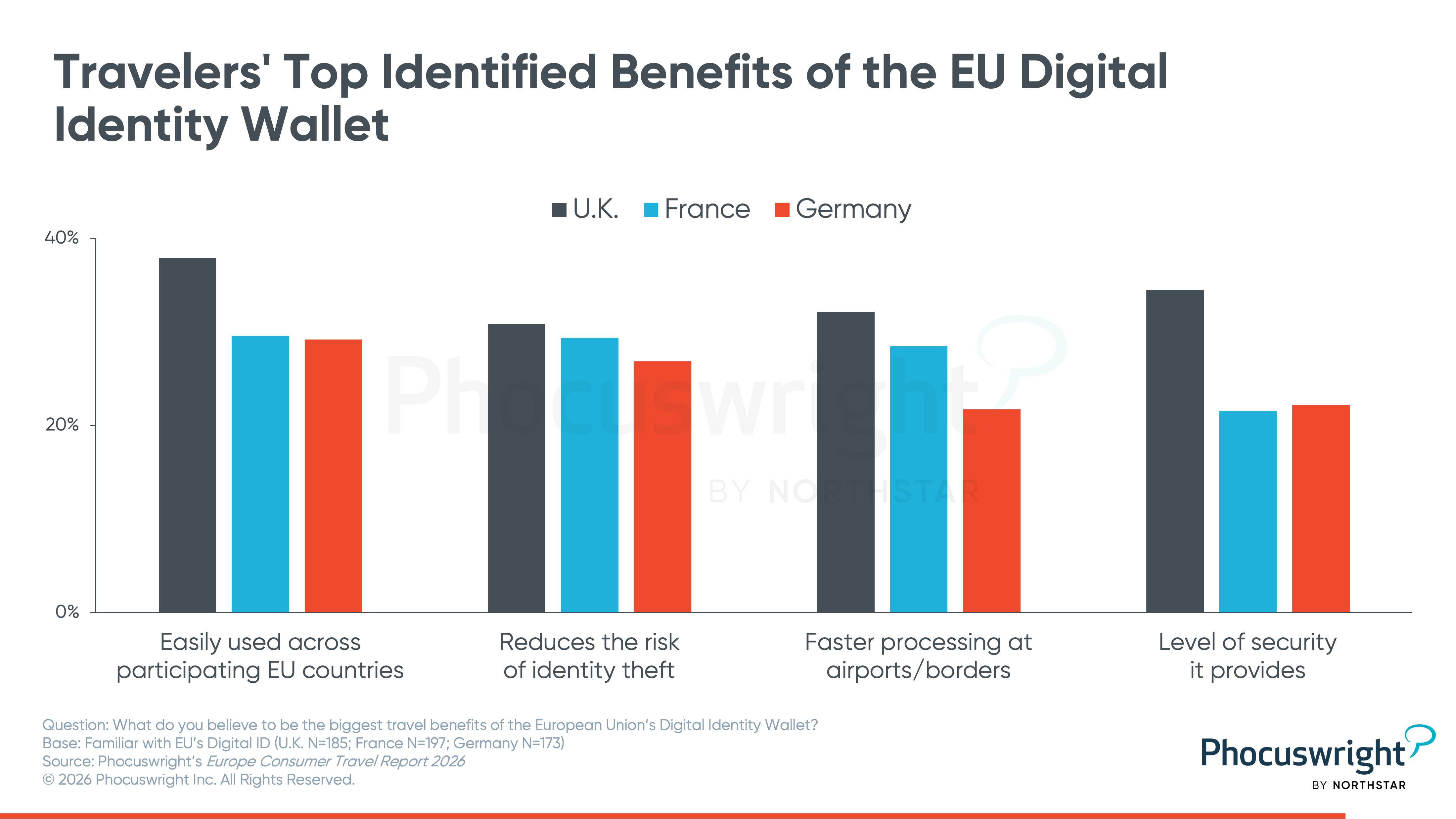
Here's a closer look at five trends shaping adoption across the three markets:
- Familiarity is rising, but unevenly. High familiarity with the EU Digital Identity Wallet climbed in all three markets between 2025 and 2026. France leads at 25%. Germany rose fastest, to 21% from 13%. The U.K. remains lowest at 18%.
- Adoption intent doesn't track with familiarity. Among travelers already familiar with the wallet, more than half in the U.K. and France say they're likely to use it for travel once available. Germany trails as the largest neutral group of the three markets.
- National ID trust splits sharply by country. Germany's Personalausweis holds trust from 54% of travelers, more than double those who trust France's national ID, France Identité. U.K. trust in GOV.UK One Login sits in between.
- Data comfort narrows as use cases widen. Comfort sharing travel documents or profile information with a travel company for a direct benefit, such as faster check-in, ranges from 33% to 47% across the three markets. That comfort drops once the data would be shared across companies rather than used for one clear purpose.
- Each market calls for its own message. France's lower overall trust in identity systems means its rollout should lean on security and identity-theft protection. Germany's high trust in Personalausweis means the wallet should be framed as an extension of an already trusted habit. The U.K.'s lower wallet familiarity but comfort with travel-company data storage means messaging should center on concrete travel benefits rather than EU citizenship.
The new report’s conclusion is direct: a single European narrative will likely miss the market-by-market differences in familiarity, trust and intent that this data shows.
In Europe, Digital Identity Wins on Trust, Not Convenience also outlines sector-specific implications for airports, airlines, hotels, OTAs, payments providers and travel technology companies. The report is available now to Phocuswright Open Access subscribers, along with the rest of the research library and the Phocuswright AI research assistant.
More Research Insights