Latin America hit a travel record. Read the fine print.
- Published:
- November 2026
- Analyst:
- Phocuswright Research


Latin America closed 2025 with the highest travel gross bookings in its history. The headline growth rate looks strong. But roughly half of it came from exchange rates, not travelers.
According to Phocuswright’s Latin America Travel Market Report 2026, four of the five core currencies strengthened against the U.S. dollar last year. The same volume of travel simply converted into more dollars. Measured in local currency, Mexico, Chile and Colombia grew in the low single digits. Brazil was the exception, posting real growth on nearly every measure that isn’t a currency: passengers, foreign arrivals, hotel rates and online penetration.
That gap matters for anyone planning around the region. Mexico remains the largest market, but its lead over Brazil is narrowing fast. Record visitor counts in Mexico did not translate proportionately into spending. Brazil’s growth is volume-led and harder to argue with.
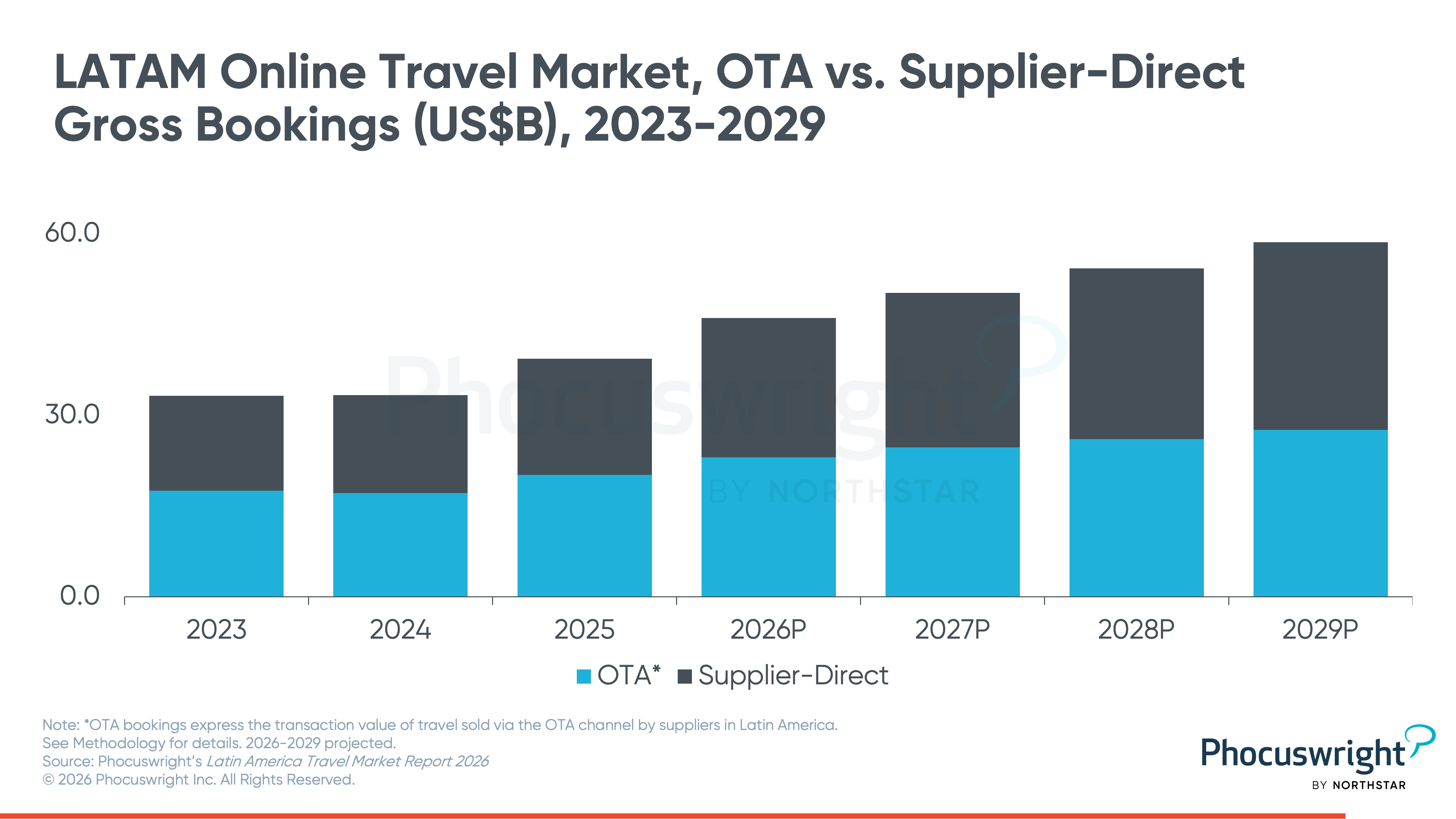
The more durable story sits inside online distribution. Latin America reached online-offline parity in 2025. Now the question is who captures those online bookings. For years the answer was OTAs, built on fragmented hotel supply, low card penetration and a preference for installment payments.
That’s changing. Supplier-direct bookings are growing faster than OTA bookings and are projected to overtake them in 2027. Low-cost airlines want to own the transaction so they can sell seats, bags and installment plans. Car rental operators in Brazil have built app-first journeys. Hotel chains are converting independent properties into loyalty ecosystems.
OTAs aren’t retreating everywhere. They still hold a firm grip on lodging, where no chain can aggregate the long tail of independent properties. And Prosus’ takeover of Despegar puts the region’s largest OTA inside a consumer-internet group with fintech and food delivery behind it. That’s a very different competitor than a standalone travel platform.
Offline channels also refuse to fade. Agencies still move about half the market, in part because they distribute credit and confidence along with travel. That makes the human layer the most likely place for AI to deliver early value in the region.
The full Latin America Travel Market Report 2026 sizes the region’s five core markets by segment and channel, with projections through 2029. It covers where supplier-direct overtakes OTAs, which markets are growing in real terms and how AI is entering a region where half of all travel still sells offline.
Open Access
Open Access subscribers get the full report plus Phocuswright’s entire research library across every region and segment. They also get the AI research assistant, which answers questions directly from our data. Ask it how Brazil’s channel mix compares with Mexico’s, or which segment is digitizing fastest, and get an answer in seconds instead of digging through reports.
More Research Insights