In Eastern Europe, local OTAs beat the giants by going narrow
- Published:
- October 2026
- Analyst:
- Phocuswright Research


Booking.com leads accommodation in nearly every Eastern European market. Yet the region’s fastest-growing online travel agencies (OTAs) are homegrown players that know their customers better than any global platform can.
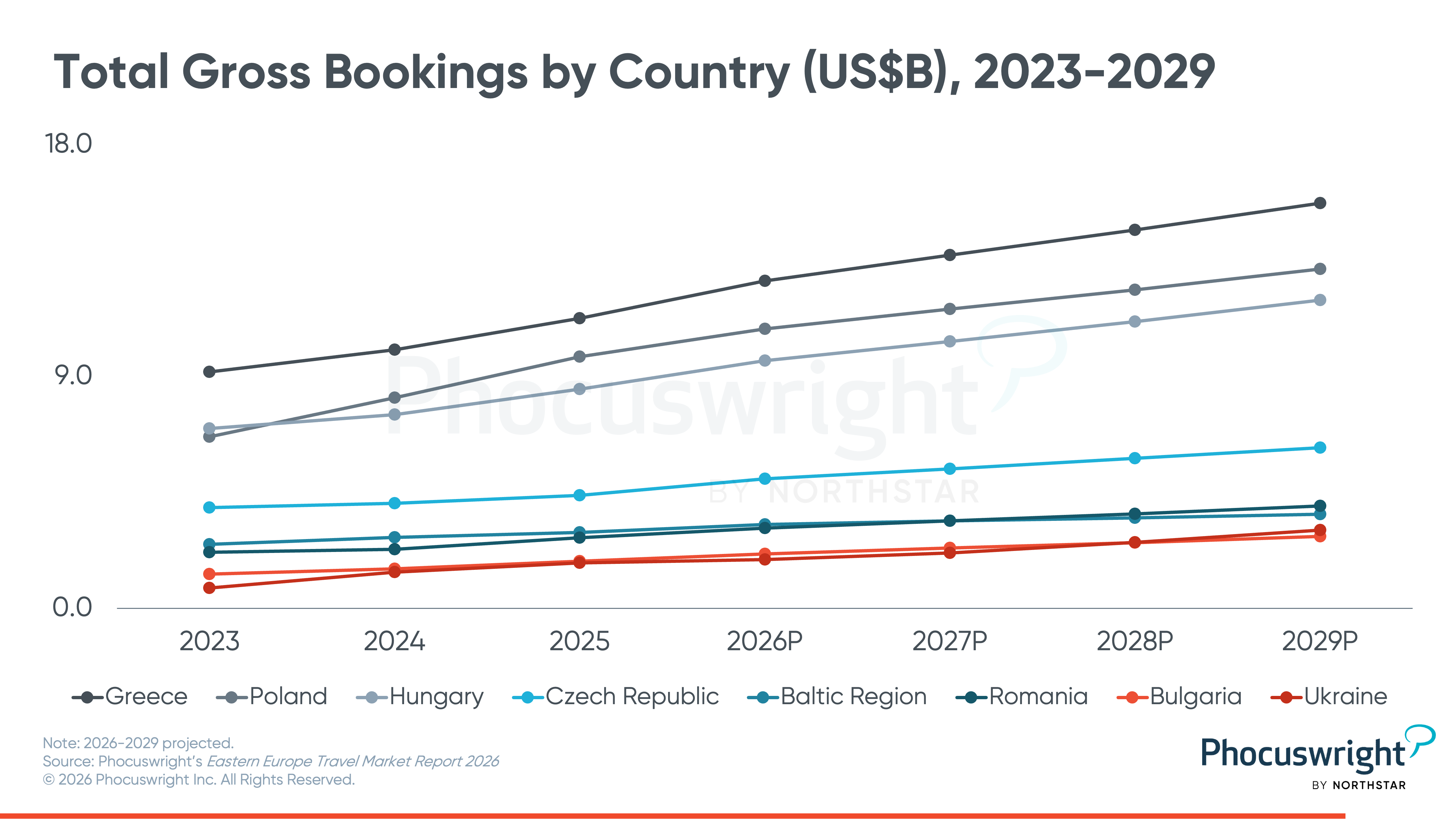
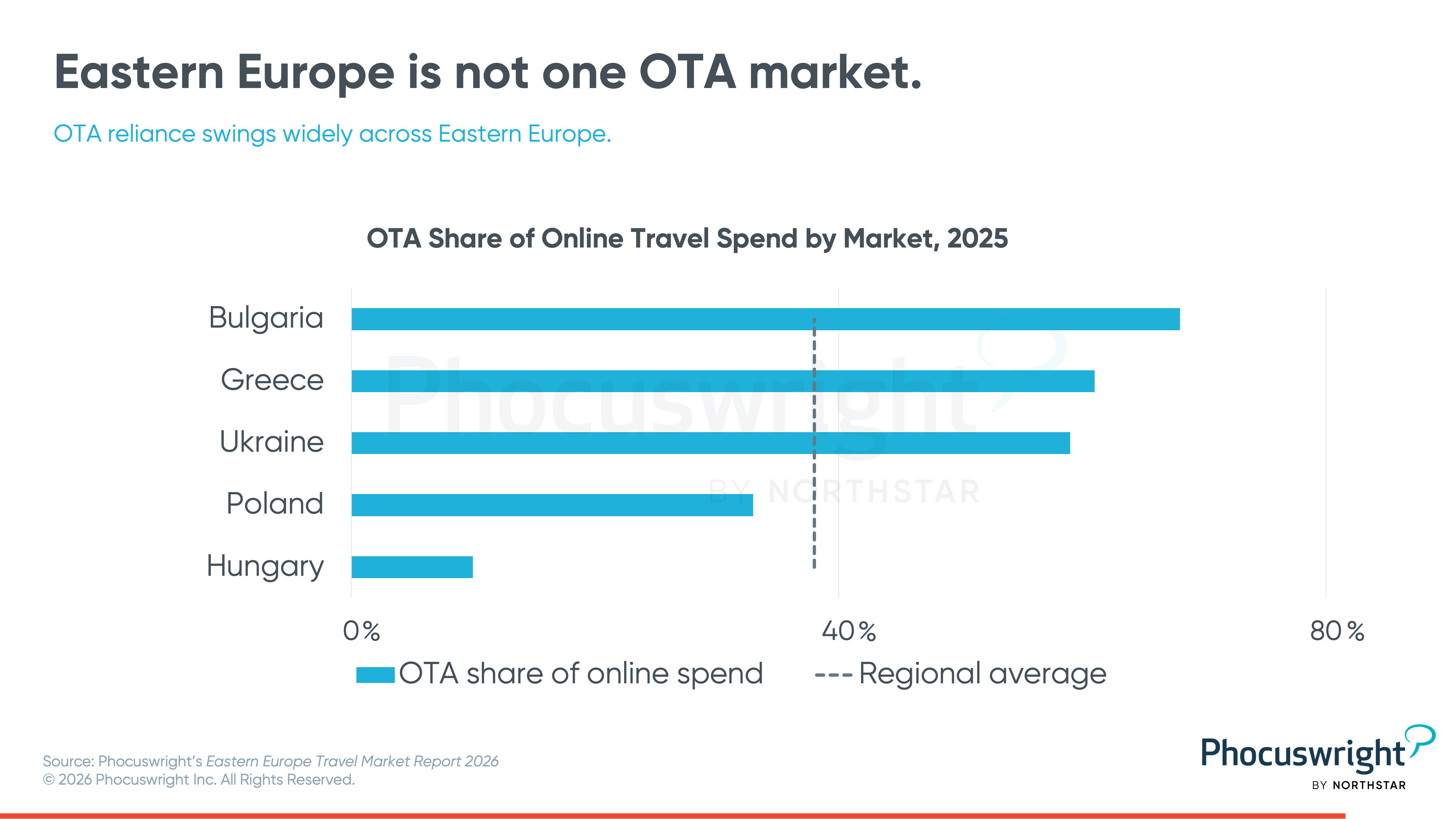
Phocuswright’s Eastern Europe Travel Market Report 2026 shows a region growing at double-digit rates, with online bookings outpacing the total market. But Eastern Europe is not one market. Payment habits, language and consumer trust differ sharply from Warsaw to Bucharest to Athens. That fragmentation protects local brands.
Low-cost carriers force OTAs to build, not just resell
Low-cost carriers hold a far bigger share of air travel here than in Western Europe, and they push hard for direct bookings. Margins on their tickets are thin or nonexistent for intermediaries. Regional OTAs responded with technology. They stitch unconnected airlines into single itineraries through virtual interlining, then layer hotels, insurance and car rental on top through dynamic packaging.
Romania’s Vola.ro and the Czech Republic’s Kiwi.com show how far this model can go. Kiwi.com saw virtual interlining demand spike when Gulf hubs shut down earlier this year.
Hotels remain the OTA stronghold
The hotel segment is the region’s largest and its least digitally mature. Most rooms belong to independent hotels, guesthouses and private apartments with no property-management or channel-manager systems of their own. Their websites often serve as little more than contact pages. As a result, OTAs dominate online hotel distribution and will keep doing so.
Rail is digitizing fastest
Rail is shedding its analog past. Poland and the Czech Republic lead, with most tickets now sold online or through apps. Romania and Bulgaria still sell many regional tickets at station counters. A new EU data-sharing standard could open international rail ticketing to more online sellers.
Two shocks reshape the forecast
The Middle East crisis pushed tour operators away from Egypt, Jordan and Oman toward Southern Europe. Revenue hit records while margins tightened. In Ukraine, the war has shrunk the reachable consumer base and turned airports in Poland, Romania and Moldova into proxy national gateways.
AI: tuning beats spending
Regional players cannot match the AI budgets of global OTAs. They compete on adaptation speed and local personalization instead. Some bet on conversational assistants for inspiration; others are building for a future where travelers’ own AI agents do the booking.
The full report covers market sizing through 2029, channel shares by segment and country profiles for Greece, Poland, Ukraine, Hungary, the Czech Republic, Romania, Bulgaria and the Baltics. Read the Eastern Europe Travel Market Report 2026.
Get the full picture with Open Access
Open Access subscribers get the complete Eastern Europe Travel Market Report 2026 plus every Phocuswright report, interactive sizing data in Phocal Point and the AI research assistant. One subscription covers every region and segment Phocuswright tracks.
More Research Insights