Travelers pay more to cancel: 58% choose free cancellation over a lower price
- Published:
- October 2026
- Analyst:
- Phocuswright Research

Booking anxiety now shapes how travelers shop, and checkout is where it peaks. A new Phocuswright report Global Booking Anxiety: The U.S., Europe and Asia Pacific shows that anxiety comes from real disruption, and that travelers reward the brands that reduce it.
The U.S. is the most anxious market
One in three U.S. travelers feels extremely or very anxious about booking an international trip. That share falls to 15% in the U.K., 14% in France and 7% in Germany. More than half of U.S. travelers say their anxiety has increased over the past two to three years, compared with roughly a third in each European market.
Anxiety follows experience
Only 36% of U.S. travelers avoided a trip or event disruption in the past 12 months. In the U.K. and Germany, 55% did. Asia Pacific tells a similar story: fewer than half of travelers in every market surveyed made it through the year without a disruption.
Anxious travelers change how they book
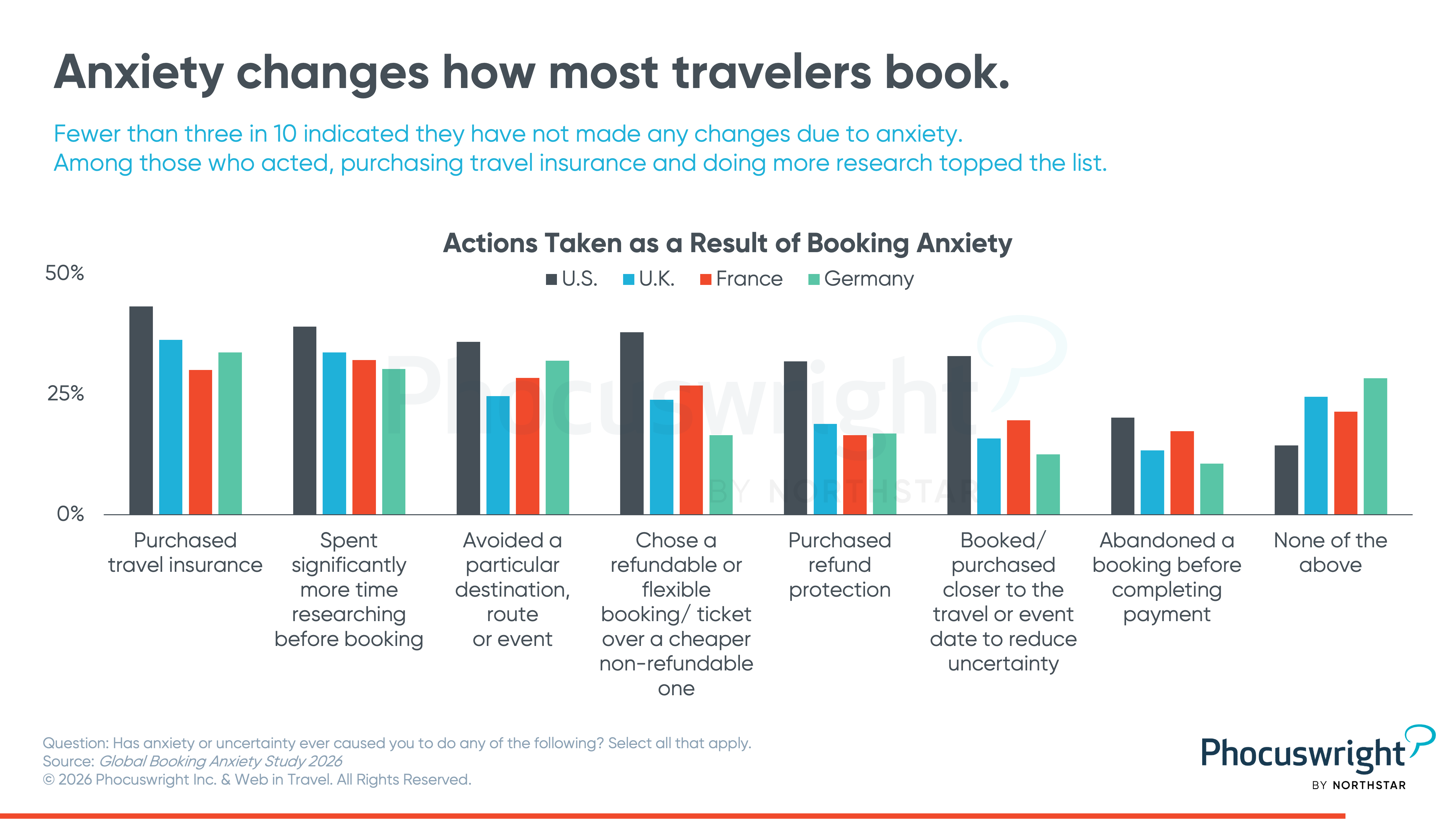
U.S. travelers respond by buying travel insurance, researching longer and choosing refundable bookings over cheaper nonrefundable ones. One in five has abandoned a booking before payment. Across markets, anxiety climbs through the booking process and peaks at checkout, which makes the payment page the point where reassurance matters most.
Same goal, different mechanism
Travelers in every market reject the lowest-price, nonrefundable option. How they want flexibility differs by region. Most U.S. and French travelers prefer a higher price with free cancellation. In China and Malaysia, travelers prefer a lower base price with refund protection added at low cost.
"100% money back" sells protection
A full refund is the most appealing refund protection feature across markets, ranking first or tied for first in all 10. Purchase intent is strongest in China (88%), South Korea (75%) and the U.S. (68%). Europe is a harder sell: many travelers who skip refund protection say they already have travel insurance, a sign that consumers do not yet see the difference between the two products.
Protection builds loyalty
Refund protection offered as a standard option makes travelers more likely to return to the same platform. That effect is strongest in China and South Korea.
What it means for travel brands
Clear cancellation terms and refund protection shown before payment can lift conversion and repeat business. Messaging should lead with full reimbursement and adapt to each market. In Germany, where anxiety is lowest, value-based positioning will work better than anxiety-led messaging.
Ten markets. One question: what makes travelers commit at checkout? Get the full data on anxiety triggers, refund protection and flexibility by market. Download the report.
Open Access subscribers get this report and the full Phocuswright research library, plus the AI chatbot research assistant. Ask it a question in plain language and get answers sourced from Phocuswright data. Compare refund protection intent across markets, pull stats for a pitch deck or find every report on a topic in seconds.
More Research Insights