After the surge: AI use holds, but travelers stop short of checkout
- Published:
- November 2026
- Analyst:
- Phocuswright Research


According to Phocuswright’s After the Surge: AI Settles Into U.S. Travel, AI use for travel has stopped climbing. After a year of fast growth, it held at about half of U.S. travelers. What changed is how they feel about the future. Far fewer now expect to rely on it more in the year ahead.
That cooling has a clear source. Women drove most of the drop in expectations, while men barely moved. Gen Z and millennials still use AI far more than older travelers, and they remain the most open to letting it book.
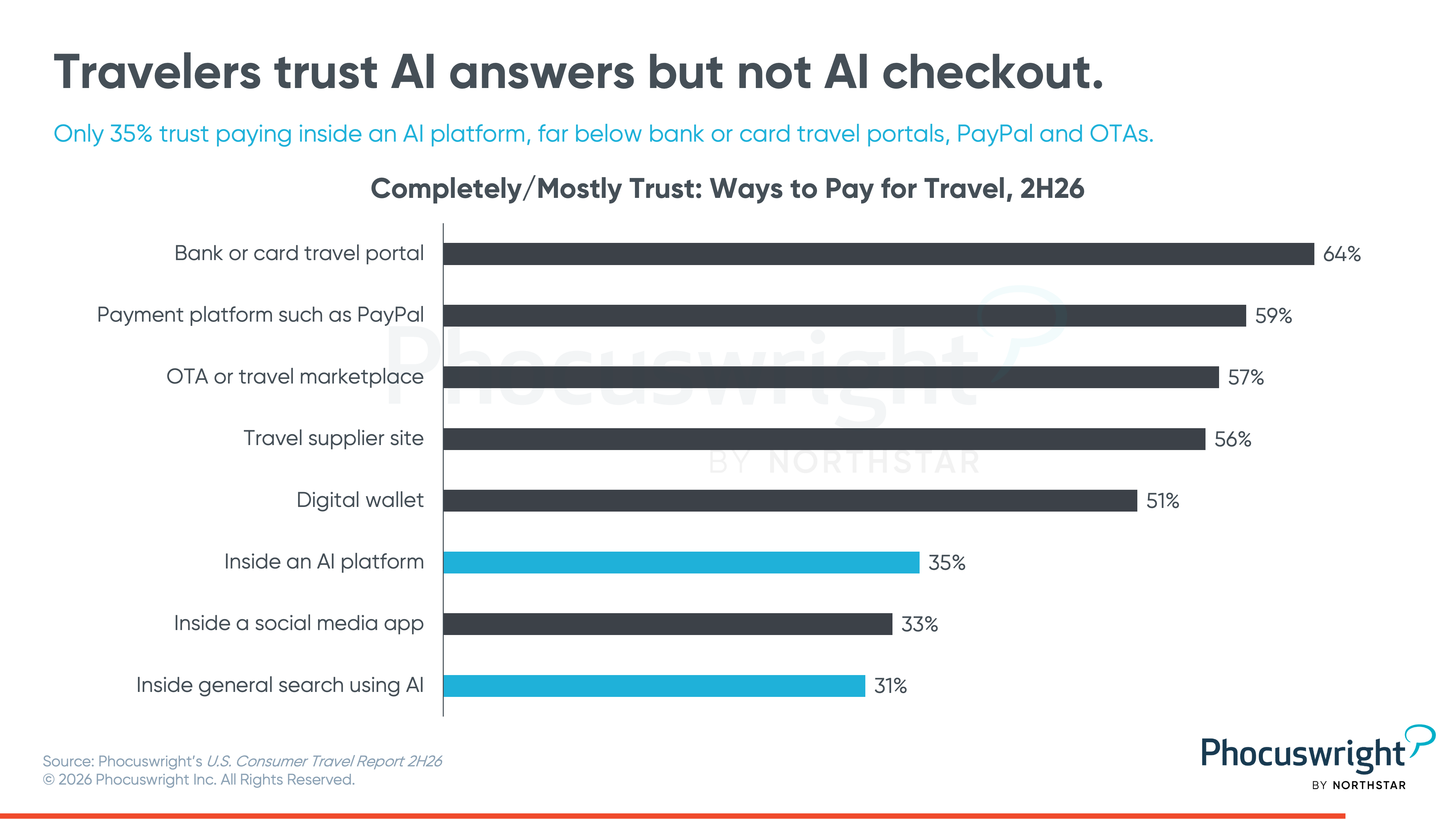
Trust is where the story turns. Travelers now trust AI answers on travel sites almost as much as traveler reviews. But trust falls hard at payment. Paying inside an AI platform ranks near the bottom of every option tested, well below OTAs, supplier sites and bank or card travel portals.
The gap shows up in bookings. About half of AI-savvy travelers say they would book through AI. Very few actually do. OTAs remain the most common way to book air, hotels and car rentals.
Search hasn’t gone away either. Most travelers who see AI answers in search still click through to check live prices and availability. Few say the AI answer is enough on its own.
The full report profiles “agentic travelers,” the group most willing to hand booking over to AI. It shows how they differ in age, trip frequency and spending, and it lays out what travel brands should do now to win them.
Open Access
Get the full picture with Open Access. Subscribers get this report plus Phocuswright’s complete library of travel research, with every dataset, chart and analyst finding. Need an answer fast? Ask Phocuswright’s AI research assistant. It searches the whole library and returns sourced answers in seconds, so you can go from question to evidence without digging through PDFs. Learn more about Open Access »
More Research Insights