

Younger generations have befuddled a generation of marketers for their perceived resistance to loyalty and their brand-agnostic attitudes. But these attitudes suggest that loyalty isn't unimportant to them; it's simply at odds with another one of their prized travel values. And when novelty and loyalty are forced to compete, novelty frequently emerges as the winner.
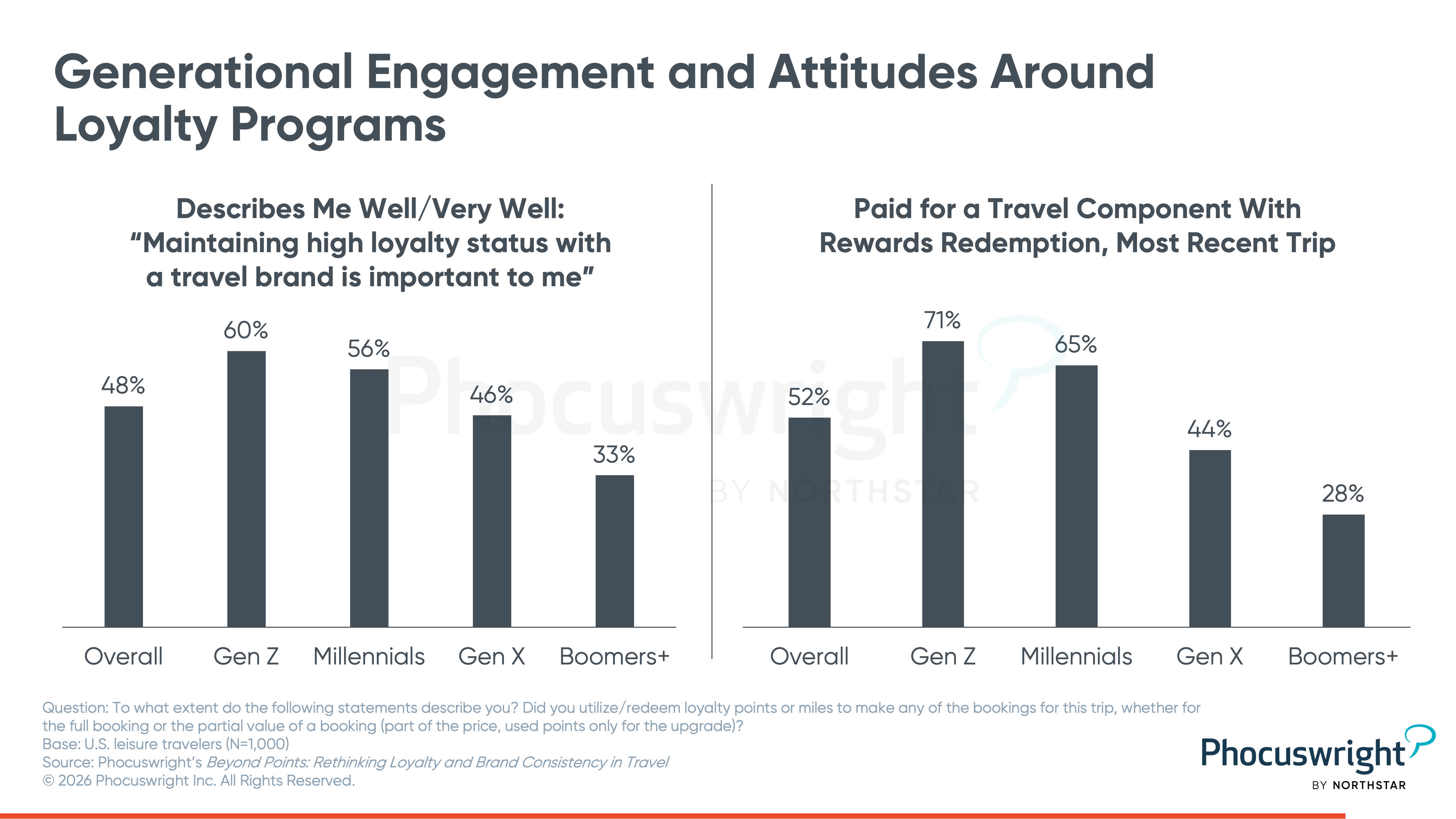
According to Phocuswright’s Beyond Points: Rethinking Loyalty and Brand Consistency in Travel, Gen Z expresses a strong proclivity towards diverse experiences, but their participation in loyalty programs is far from obsolete. Younger generations are more likely to say that maintaining high status in loyalty programs is important to them, and in fact the Gen Z and millennial travelers had far higher rates of redemption on recent leisure trips than Gen X or boomers and the Silent Generation. The high levels of program engagement are a promising indicator, even if these groups do not attempt to use the same brands repeatedly the way other generations do.
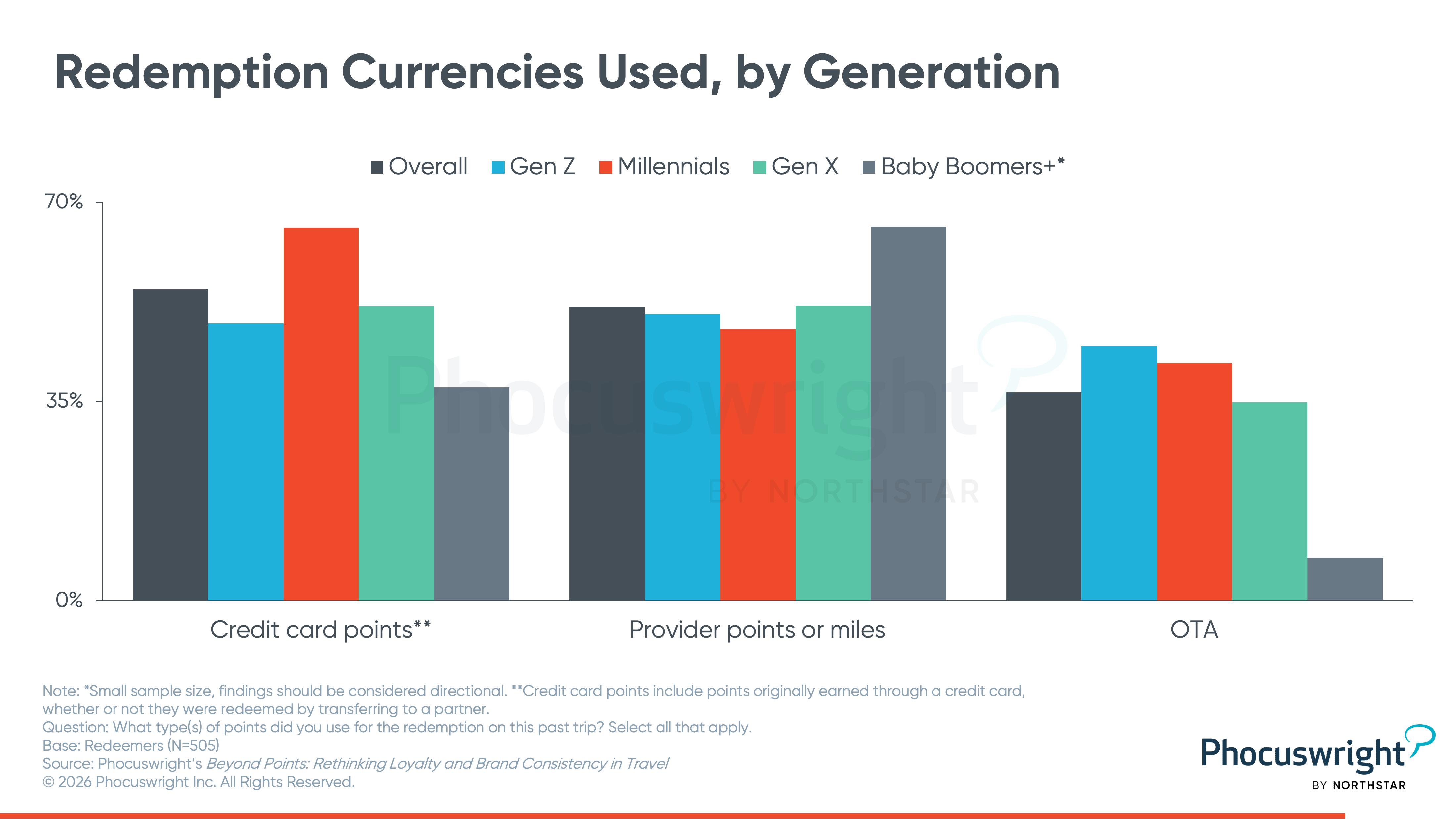
Given the clashing needs of novelty and loyalty, the programs in which Gen Z (and millennials in many respects) participate in can accommodate the thirst for changing experiences. Provider loyalty schemes do not always offer the flexibility they crave, but younger travelers have turned to programs that do provide versatility. Millennials are more likely than other generations to redeem travel components with credit card points; two in three millennials who made a redemption did so through points originally earned through a credit card program. Both Gen Z and millennials are also more likely to use rewards on OTA programs, which offer a broad spectrum of redemption options. They engage in programs with enough activity to earn the points to make redemptions—even if they game the systems at times. However, programs that fail to offer diverse opportunities risk diminished engagement from the travelers who are fueled by a need for constant change.
As the spending power of millennials and Gen Z continues to rise, provider programs must consider how to offer novelty in both the earn and burn sides of the programs. They must also consider how to effectively communicate the program's options to travelers who may find a one-provider redemption scheme restrictive. Credit card and OTA programs have a natural edge on the variety front, but they can still focus on continuing to expand their partnerships to offer a wider range of redemption opportunities for a mix of travel needs and occasions. Those who rely too heavily on their brand reputation to fuel loyalty may fall short with these younger travelers, as it takes more than positive experiences to bring them back for repeated bookings.
Phocuswright’s Beyond Points: Rethinking Loyalty and Brand Consistency in Travel is part of the Travel Loyalty in 2026: What Consumers Want, What Brands Deliver series, a comprehensive consumer research study delving into the specifics of how U.S. travelers perceive brand loyalty and engage with the current ecosystem. Key questions addressed by this chapter include:
- How do travelers define loyalty—and how does this differ from how brands structure loyalty programs?
- What kinds of generational differences exist in brand consistency, loyalty engagement and redemption habits?
- Why do travelers stray from their go-to brands, and how does novelty factor in?
- How can loyalty programs evolve to attract younger travelers seeking flexibility, variety and value?
- Which loyalty models are best positioned to succeed in today’s travel environment, given travelers’ shifting priorities toward flexibility, variety, and value?
Phocuswright powers the travel industry’s smartest decisions. Turn deep market intelligence into sharper strategy, faster action and more innovative growth. Learn more here.
More Research Insights