Wellness tourism hits $894B and the real growth is still ahead
- Published:
- May 2026
- Analyst:
- Phocuswright Research


Traveling for wellness is not a new concept. Ancient authors wrote about visiting special sanctuaries for healing, coastal towns for thermal baths, or travelling to warmer climes to recover from illness. What makes the difference in 2026 according to Phocuswright and WiT’s Online Travel Tracker: The Wellness Stack, is the vast pool of different options and destinations available, and that wellness tourism is now at “the powerful intersection of two large and growing multi-trillion-dollar industries: tourism and wellness”.
What exactly is “wellness tourism”?
- The Global Wellness Institute (GWI) defines wellness tourism as “travel associated with the pursuit of maintaining or enhancing one’s personal wellbeing”, distinct but often confused, with medical tourism. It sees wellness tourism as a proactive step to maintain health and augment wellbeing.
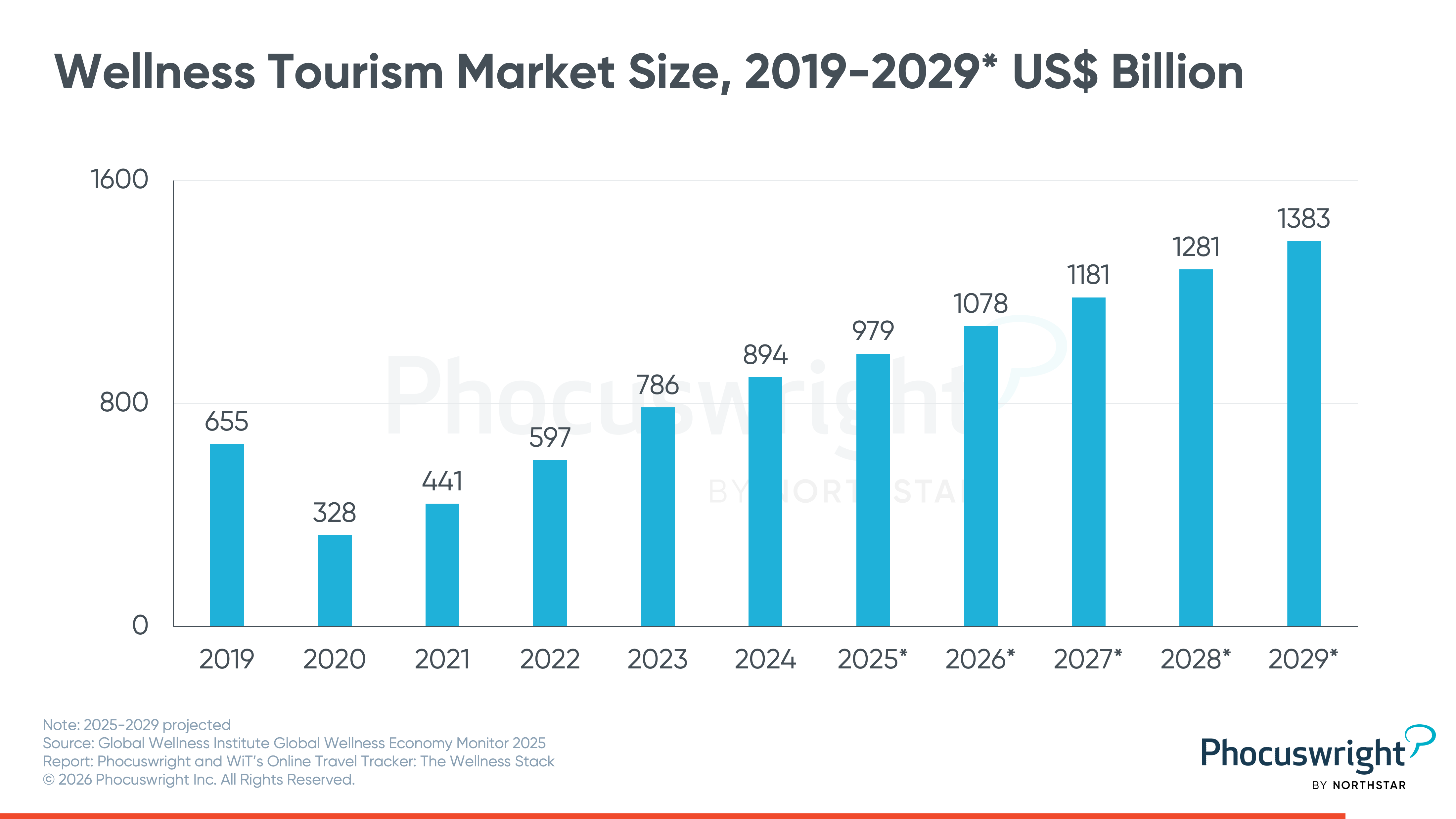
- Wellness tourism is growing fast. It has doubled in size from $438 billion USD in 2012 to $894 billion in 2024, well surpassing pre-pandemic levels by 36%.
- Wellness tourism is forecast to reach $1.4 trillion by 2029, with a CAGR of 9.1% Wellness tourism is increasingly promoted hand in hand with regenerative and sustainable tourism, taking the approach of wellness for the body and mind combined with wellness of the destination itself.
Consumer demand for wellness is high
GWI has identified two profiles of wellness travellers - those whose primary motivation for a trip is wellness, and those who look to maintain their wellness or participate in wellness experiences during their trip.
- Around one in ten consumers across Europe and the U.S. travelled for wellness in 2025, whilst up to a quarter of German travelers participated in spa/wellness.
- Consumers in general are placing high importance on wellness. A McKinsey 2025 Future of Wellness Trends Survey showed that 84% of US consumers say wellness is a “top” or “important” priority, 79% in the United Kingdom and 94% in China.
- Wellness spend is a resilient category. In the same McKinsey survey, consumers noted that in a downturn, they are less likely to cut down on their wellness subcategory spending than clothing or entertainment.
- Consumers are increasingly seeking in-person experiences. 56% of US consumers reported travelling 2 hours or more for wellness retreats, whilst 60% of consumers who travelled for health and wellness treatments in 2024, and expected to travel for wellness in 2025.
- Searching for respite. Hilton’s 2026 Trends Report - The Whycation: Travel’s New Starting Point highlighted that 56% of travelers' top motivation is “to rest and recharge”. 67% of American travelers noted a stronger interest in nature immersion retreats (67%), followed by spiritual retreats (60%), and meditation/silent retreats (56%).
- Growth in mindfulness, spas and geothermal destinations. Trip.com and Google’s “Why Travel?” report showed in H1 2025 a growth in wellness activity searches. “Japanese tea ceremonies” saw a +53% YoY growth in search interest, +140% YoY for spa destination experiences, +250% YoY for “all inclusive spa”, +300% for “golf and spa reports”, and +20% YoY for onsens.
- Wellness isn’t only for leisure travelers. Australia has seen wellness shift to a strategic design element for incentive travelers, linked to productivity, engagement and retention.
Want more expansive data and precise relevance?
Phocuswright’s independent research and analysis gives your company a competitive advantage in the travel, tourism and hospitality marketplace.
We offer subscriptions, individual reports, custom research and multi-client special projects to make confident, data-driven decisions that outpace your competition. Learn more.
More Research Insights