Travel Experiences 2026: Market Sizing, Operator and Consumer Behavior Highlights
- Published:
- July 2026
- Analysts:
- Madeline List, Arival

Arival produces conferences, insights and community for tours, activities and attractions and is the global research authority for destination experiences. Arival research offers exclusive, primary quantitative and qualitative research to help tour, activity and attraction industry professionals understand key market trends, identify new opportunities, set their strategies, track their competitors and understand their customers. Learn more at Arival.Travel.
Phocuswright would like to thank the following sponsor of this study. Without their support, this research would not have been possible. Learn more about our sponsor here.
The experiences sector has been renowned as a fragmented space and one of the last verticals of travel to move online. COVID hit the segment harder than other verticals in terms of the impact on gross bookings, but experiences have now returned to pre-pandemic levels and the growth still outpaces the rest of the travel industry.
Today's travelers show increasing signs that they do not want to visit a destination just to sit by a pool or a beach. Relaxing vacations are now those that include purposeful quantities of tours, activities and attractions that enhance the travel itinerary. Experiences still have more ground to cover in terms of technological advancement, distribution and prioritization from travelers. But consumers are showing many signs that they appreciate the experiential part of a trip, signaling room for future growth.
This report sizes and forecasts the global travel experiences sector—day tours, activities, visitor attractions and related in-destination experiences—using a practical three-step approach.
- Map the supply. Through desk research, selective data capture of online marketplace listings and data from industry associations, government/tourism agencies and third-party firms, Arival builds counts of active businesses across 22 major experiences categories.
- Model revenue from operator data. Arival developed a bottom-up revenue model drawing on the Arival Global Operator Landscape 4th Edition (December 2025), which received 5,664 qualified responses worldwide. This study uses survey results to estimate sales levels and channel mix by operator size, category and region and scales those patterns to supply counts.
- Build the forecast. Arival compiled and analyzed third-party research from leading industry associations, research firms and governmental organizations on regional economic and travel trends to generate forecasts by region and booking channel (see Appendix).
Size of the travel market. Phocuswright provided global travel industry gross bookings data to analyze channel and regional trends as well as forecasts through 2029. Phocuswright data was also used to provide context for the experiences segment within the travel ecosystem.
Market size figures are gross bookings (GBV), the aggregate value paid by customers for eligible experiences. All numbers are expressed in nominal U.S. dollar billions (US$B), unless otherwise stated. Foreign exchange rates and inflation can influence dollar growth and may overstate or understate projections. Note that 2025-2029 figures are projected.
The experiences market spans hundreds of subcategories under tours, activities and attractions (see the full Arival Travel Experiences Taxonomy). Many of these are largely local services with unclear boundaries (e.g., wellness, leisure centers, food & drink), and Arival has undertaken a category-level review to assess what to include and exclude.
To avoid overstating the market, this report includes only those products that are reasonably tourism-oriented, publicly bookable and offered as a distinct, scheduled or ticketed experience.
Primary research: Arival conducted a survey of experiences travelers, including 800 from the U.S. and a total of 1,750 from the U.K., France, Germany and Spain. The survey was fielded in 4Q25. Qualifying criteria for experiences travelers were 18+ adults who traveled for leisure overnight in the past year at least 100 miles or 150 kilometers away from home, and booked a quality tour, activity or attraction.
Because of the sector's mostly local focus, Arival largely excludes events from market sizing with the exception of theater, shows and entertainment serving tourist markets (e.g., Broadway, shows in Las Vegas, Cirque du Soleil). Professional and collegiate sporting events, performing arts and entertainment are otherwise generally excluded. Since events have become a major driver of tourism, see Arival's The Event-Driven Traveler, for more detail on event tourism and their role in experiences.
Arival also includes a portion of the global wellness market by estimating only experience-grade spas (e.g., thermal/destination complexes and public day-access hotel spas meeting a facility threshold). This yields a far smaller, tourism-relevant subset, consistent with the scope of in-destination travel experiences.
Category limitations, boundaries and gray areas should also be noted. Many operators straddle categories (e.g., a venue may offer both "tours" and "activities"). Arival assigns a primary category per establishment to prevent double counting. Restaurants and bars are excluded unless they offer ticketed tastings or cooking classes; family entertainment centers are included only when they function as attraction-grade venues (e.g., Topgolf, themed mini-golf, indoor skydiving). Other venues such as routine arcades and bowling alleys are excluded.
This market is highly fragmented with hundreds of thousands of mostly small, private operators. These numbers reflect Arival's best estimates based on available data. Across many categories, no definitive registry of businesses exists, and estimates are based on platform listings and available association sources.
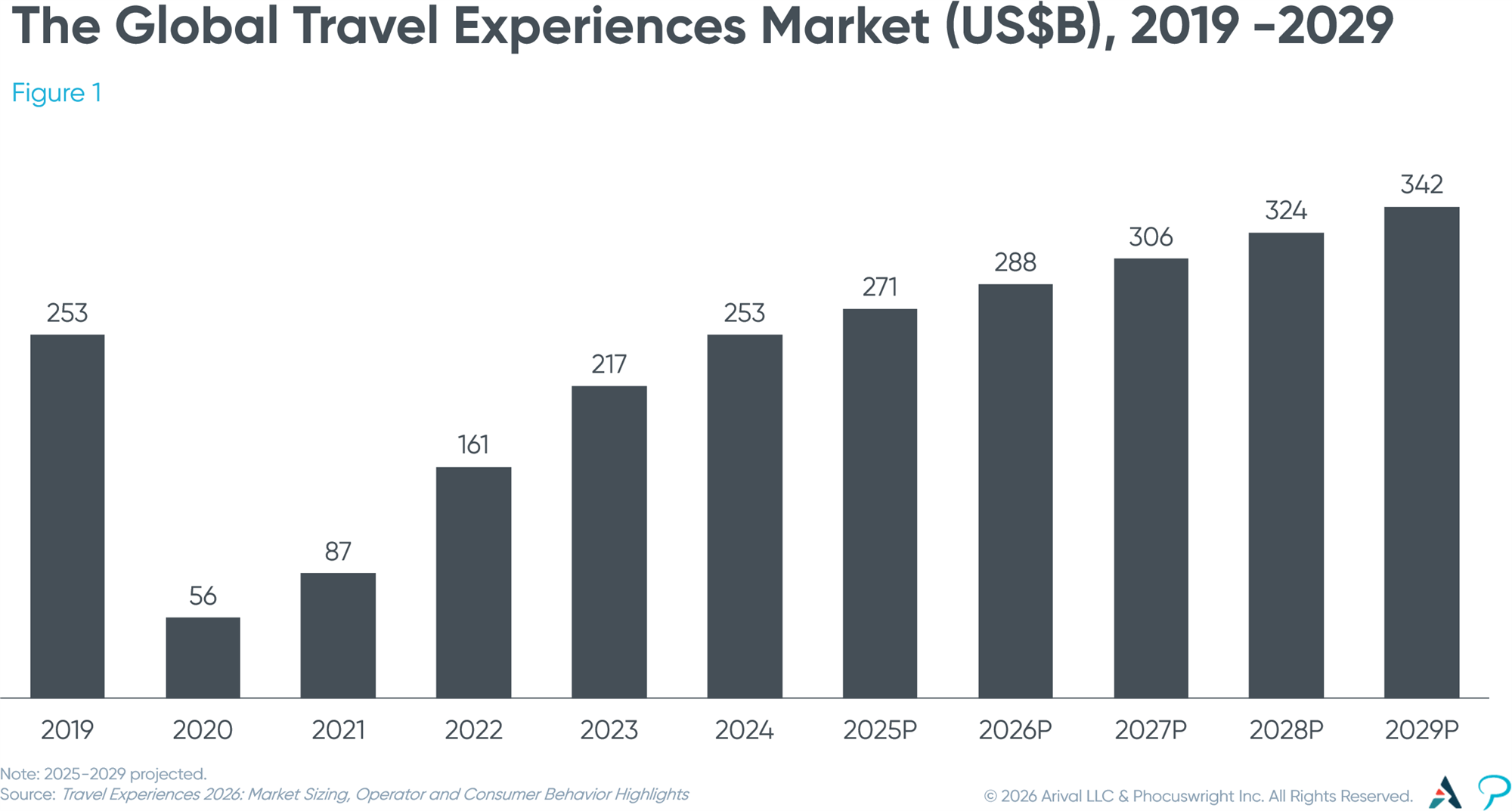
The experiences sector has seen continual growth since the pandemic. It has decelerated in recent years, but future bookings are projected to grow steadily. 2024 was the year when bookings in the global experiences market reached pre-pandemic levels ($253 billion) and in 2025 they were expected to have surpassed that.
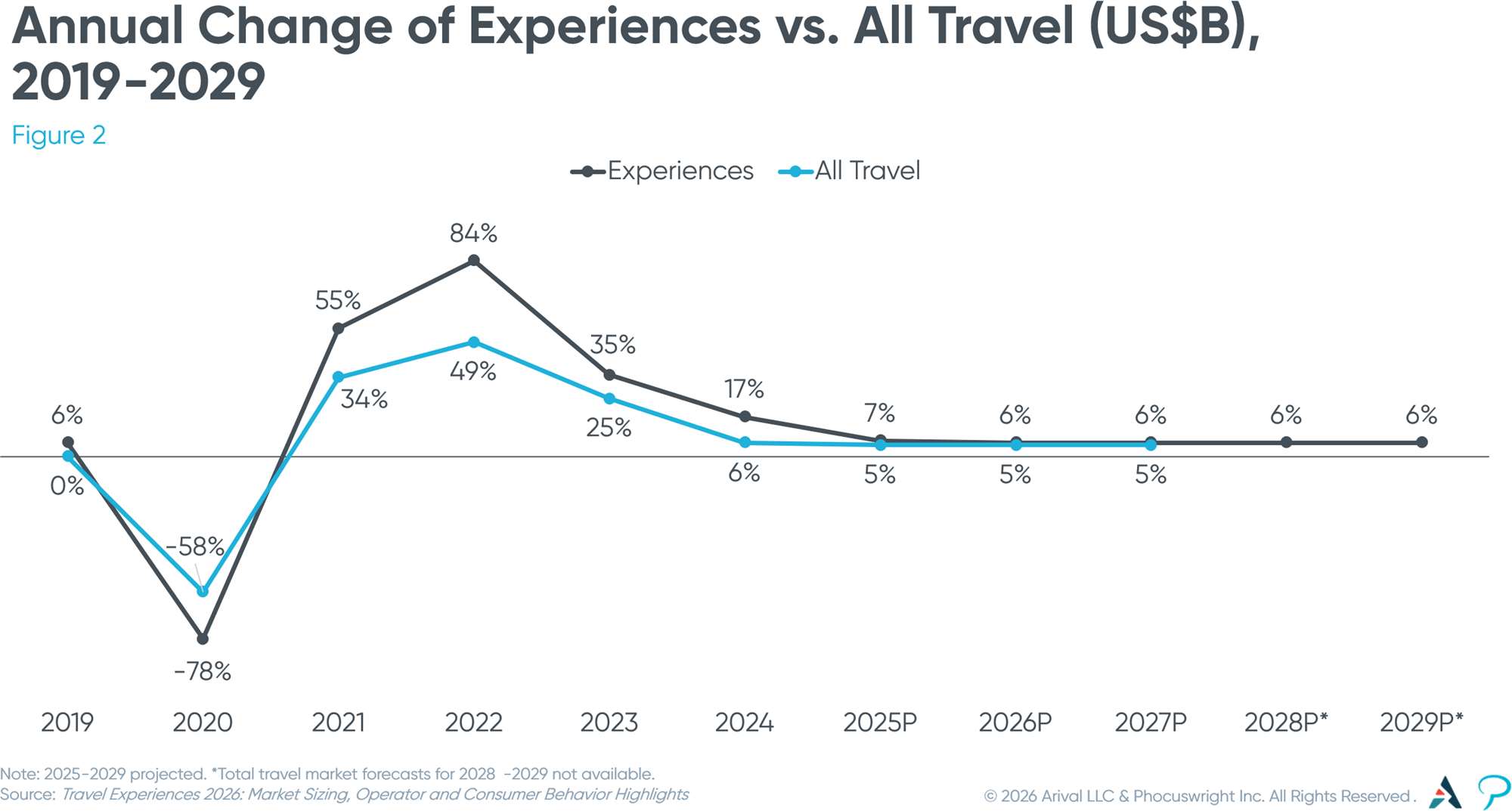
During the pandemic, experiences was a sector that suffered outsized losses compared to other travel segments, but its growth is now outpacing other parts of the industry. It increased 17% in 2024, while the rest of travel only grew at 6%. Despite a period of accelerated "catch-up" in bookings, the growth leveled out to 7% between 2024 and the projected 2025 year, and more even expansion rates are expected moving forward through 2026 and beyond. This varied by region, as North America lagged in growth due to drops in tourism and softening domestic demand.
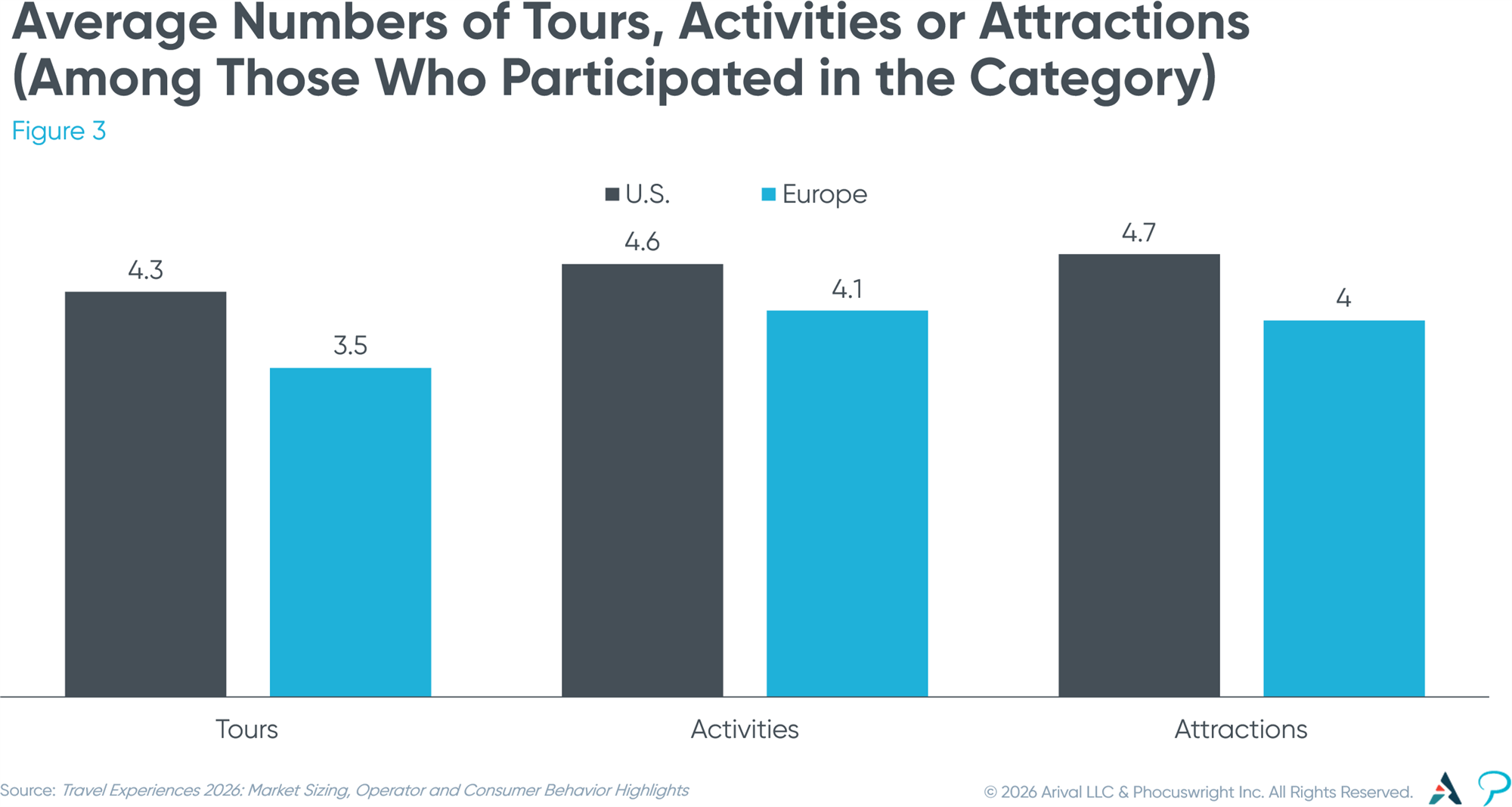
On the traveler side, experience bookings often mean multiple purchases stacked within a given trip. Travelers who participated in a tour, activity or attraction did multiple rounds per trip on average. U.S. travelers had more average experiences than Europeans across categories, despite having shorter average trip lengths of 7.1 nights compared with 8.3 nights for those in Europe.
For operators, this can indicate opportunity for repeat business within the span of a given trip. Phocuswright loyalty research has found that nearly half of travelers were visiting their recent destination for the first time, especially younger travelers. Potential for retargeting across trips exists but can be difficult for local operators, depending on which traveler segments they work with.
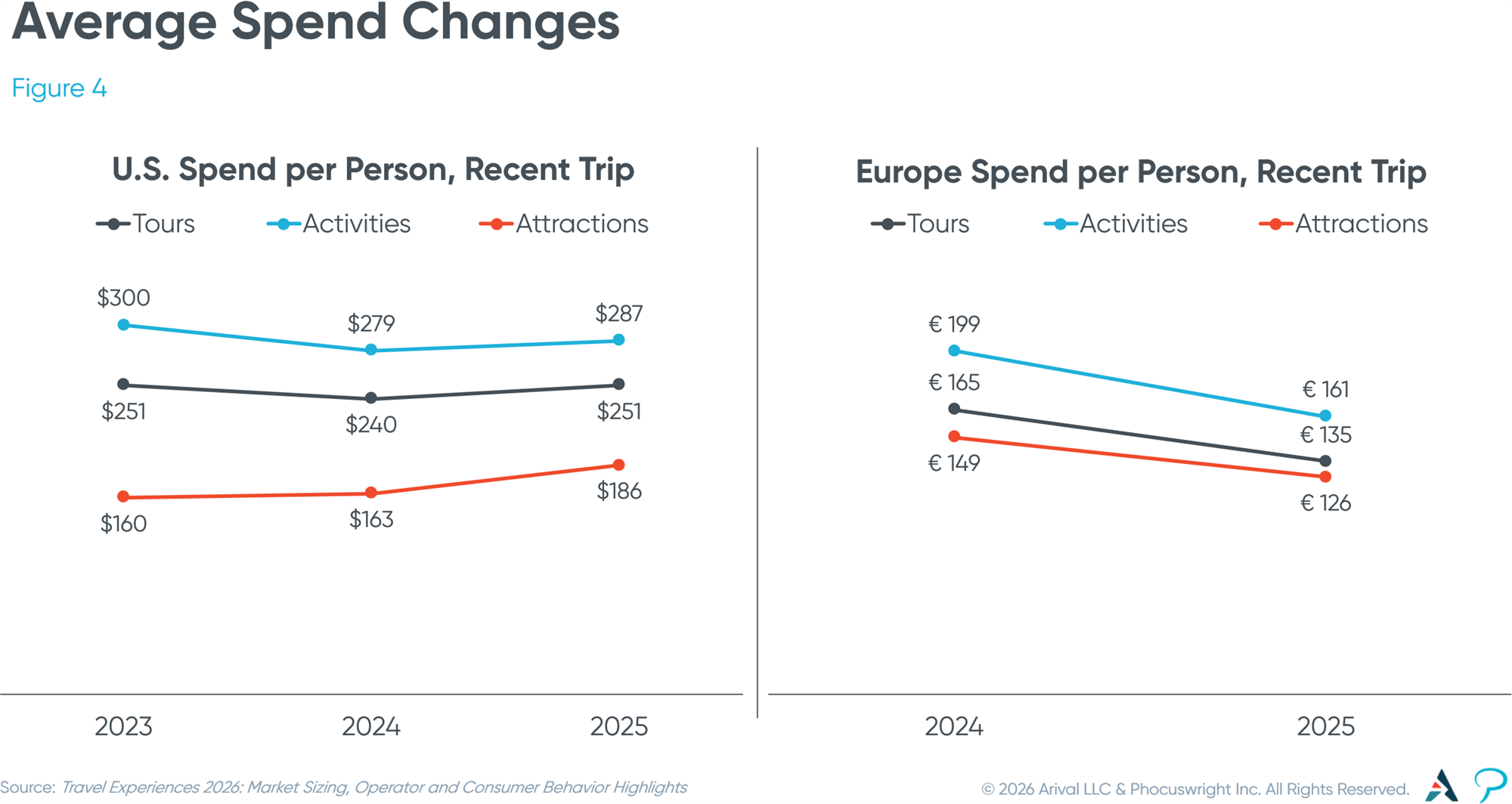
Despite so many travelers engaging in multiple tours and activities throughout a trip, spend has not shown significant increases in recent years. It has remained relatively consistent in the U.S. and even creeped down in Europe. This could be a reflection of travelers being more careful with their spending because of economic strain or a preference for maintaining the number of experiences over doing fewer, more expensive ones. They may also be diverting funds into other components of travel.
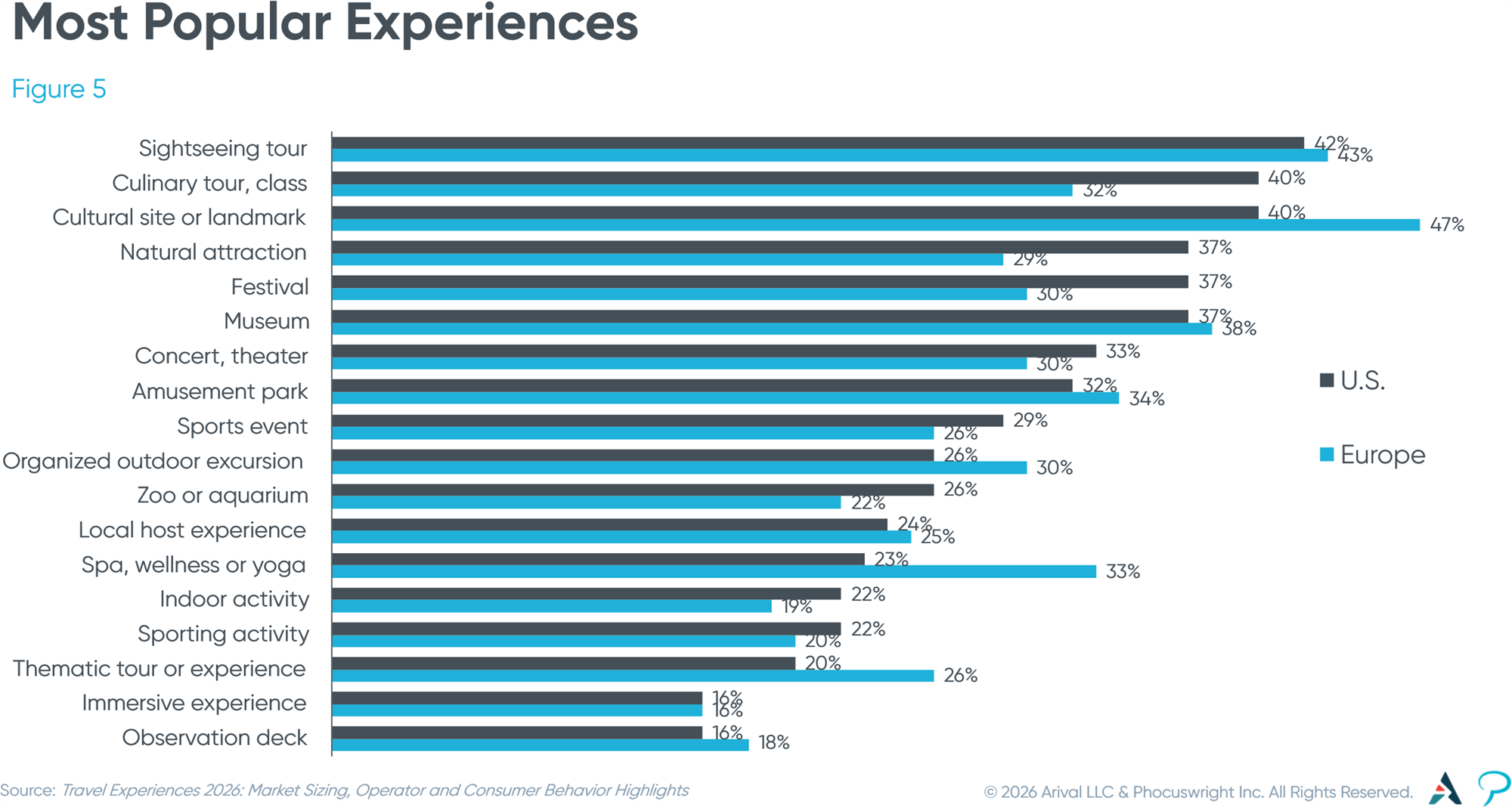
The most common types of experiences for Europeans were cultural sites or landmarks (47%), sightseeing tours (43%) or museums (38%). Spa or wellness activities were far more common among Europeans (33%) compared to Americans (23%). Sightseeing tours were also popular for U.S. travelers (42%). Americans had outsized preferences for culinary tours or classes (40%) but did not engage in as many cultural site or landmark visitations (40%) even though they remained a popular choice.
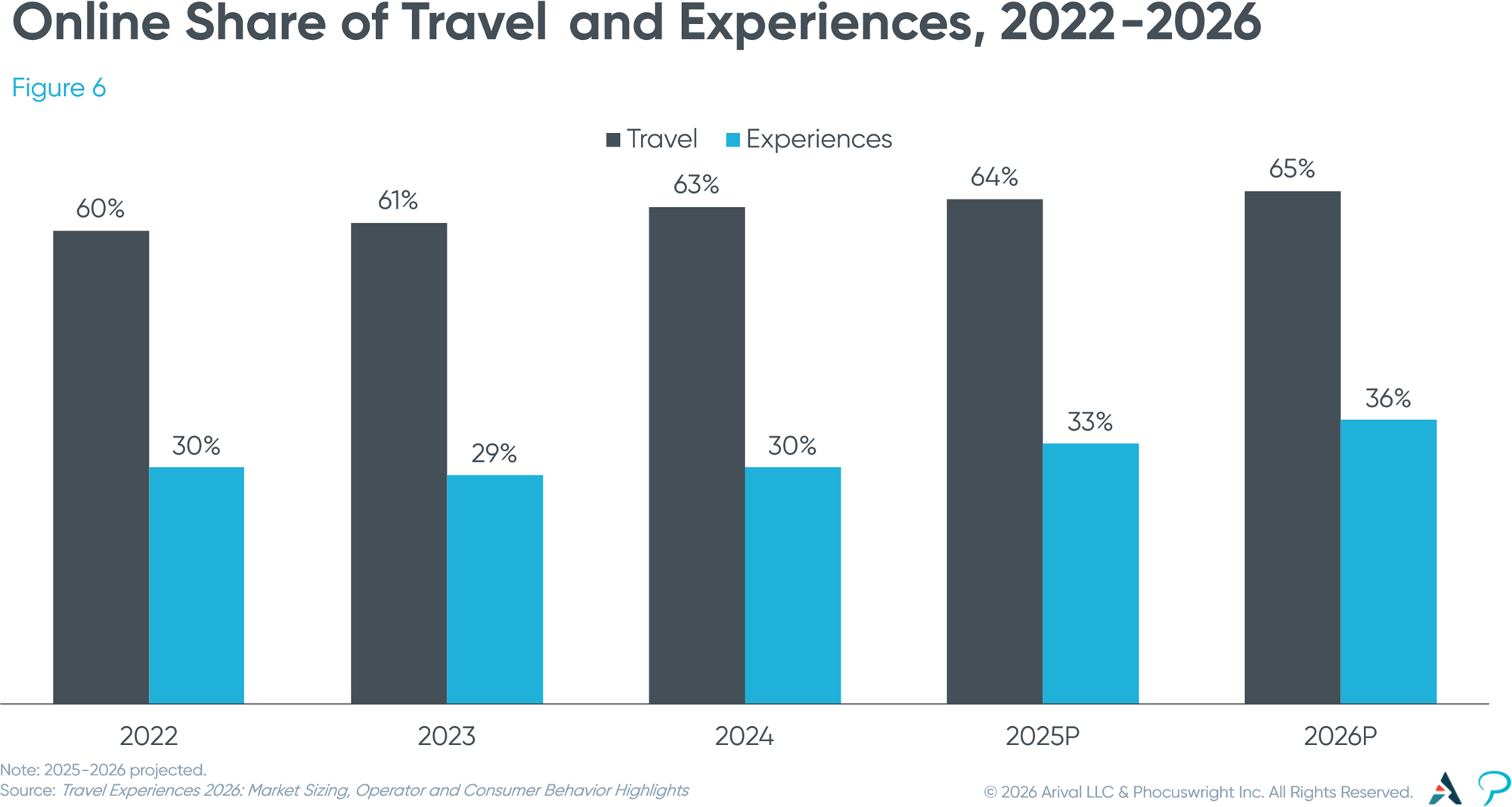
While other travel segments have already experienced a significant migration of inventory to online distribution, the experiences sector has held onto offline channels for far longer. Despite the growth of specialized experience marketplaces (Viator, GetYourGuide) or general OTAs integrating more experiences inventory, only 33% of experiences were estimated to have been booked online in 2025, compared to 64% of the travel market overall.
Several factors make the digitization of experiences more complex than that of other verticals. Supply is fragmented and ultra-local, lacking a set of leading major players that have streamlined the move to online in sectors such as air, hotel or cruise. In contrast, more than 70% of experience operators are small or micro-businesses. This makes recruiting them for online distribution logistically challenging, especially considering that some small businesses are not ambitious in their efforts to scale or distribute.
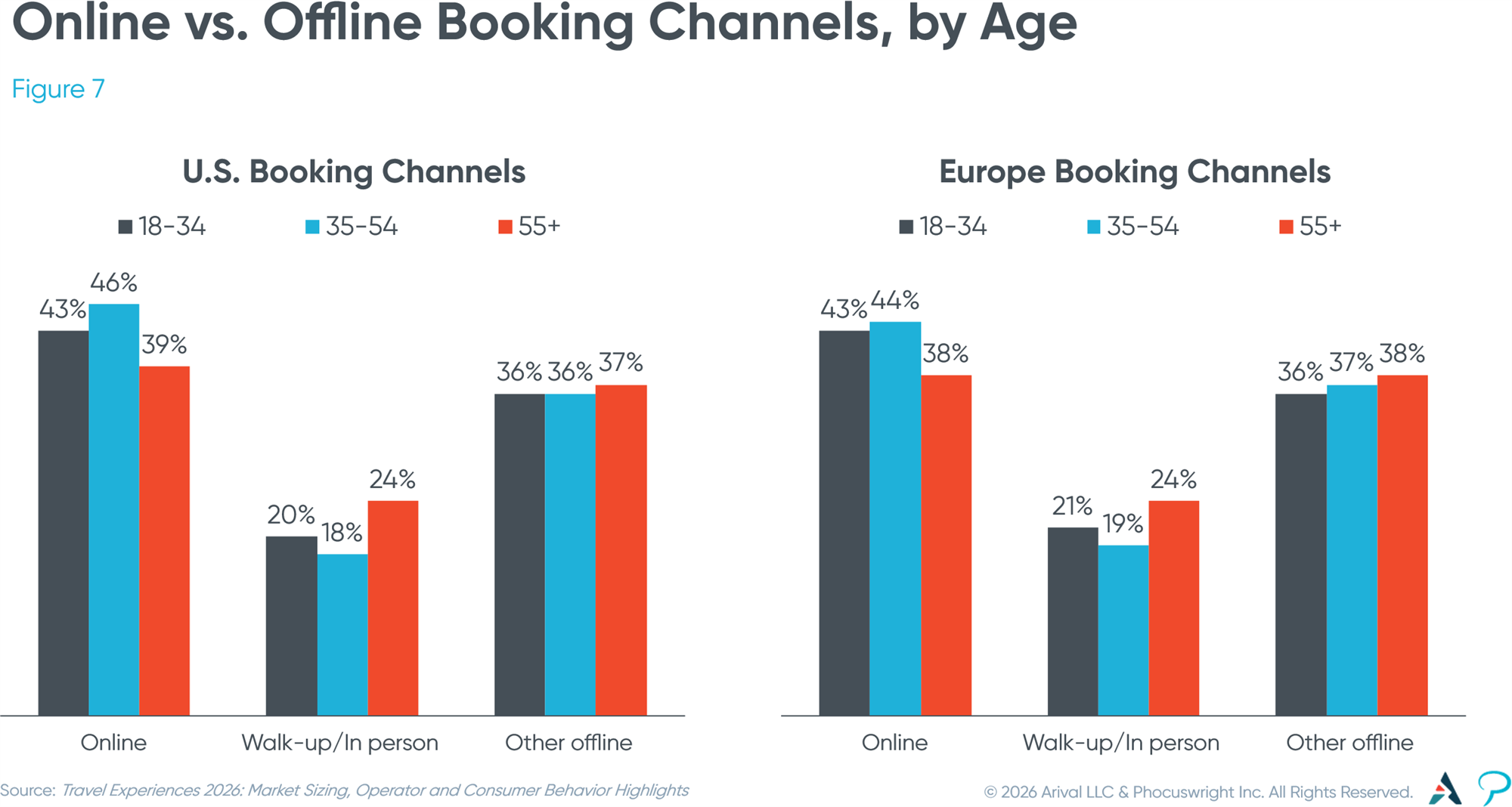
The offline distribution also corresponds with a high share of offline booking among consumers in both the U.S. and Europe. Fewer than half of U.S. and European travelers claimed they booked a recent tour, activity or attraction online, and rates were especially low in the 55+ age group. The role of in-person bookings is also unique to the experiences vertical in comparison with other areas of travel. Nearly one in five travelers under 55 and 24% of those 55+ also booked as a walk-up at a provider or ticket office.
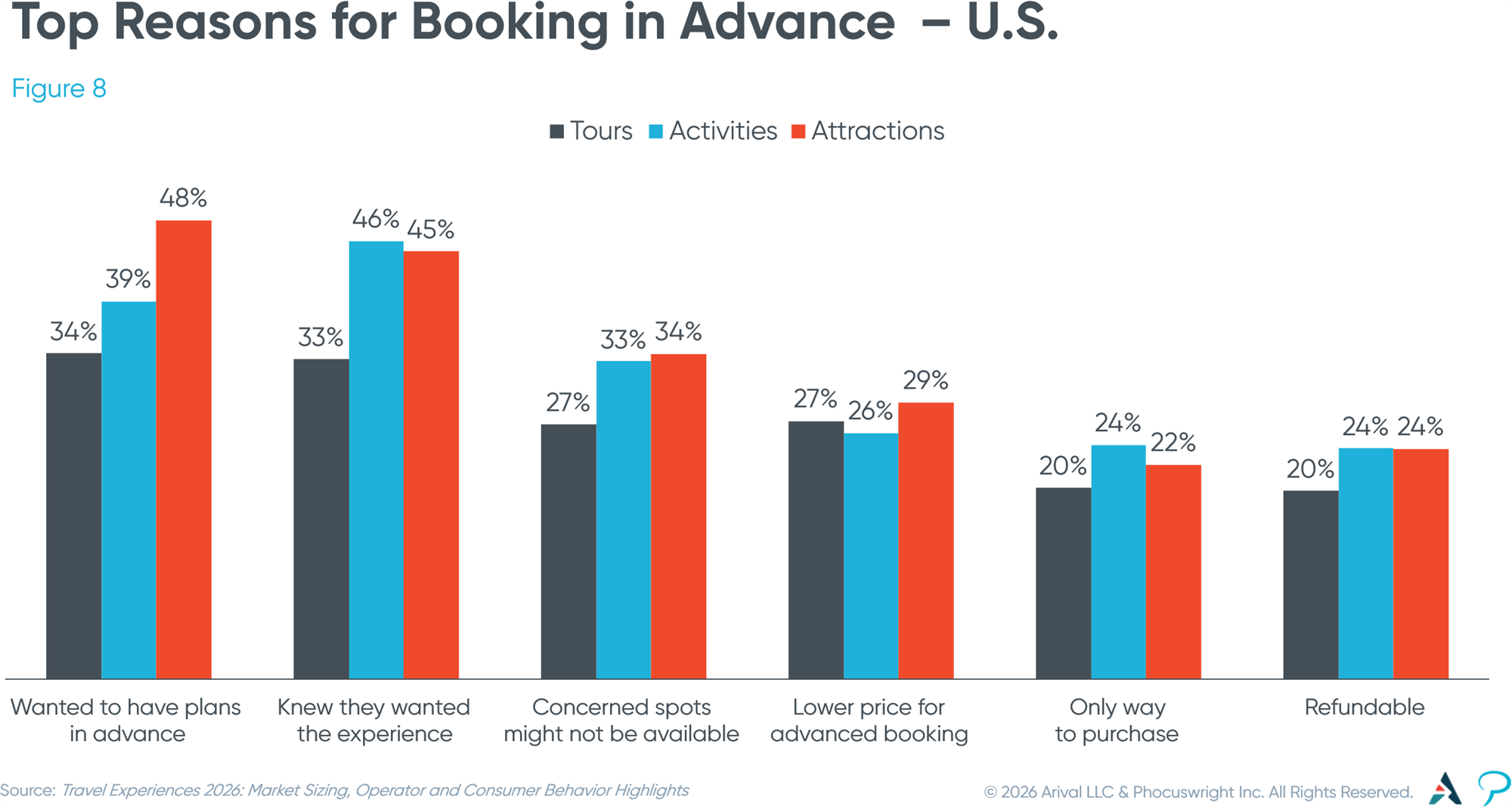
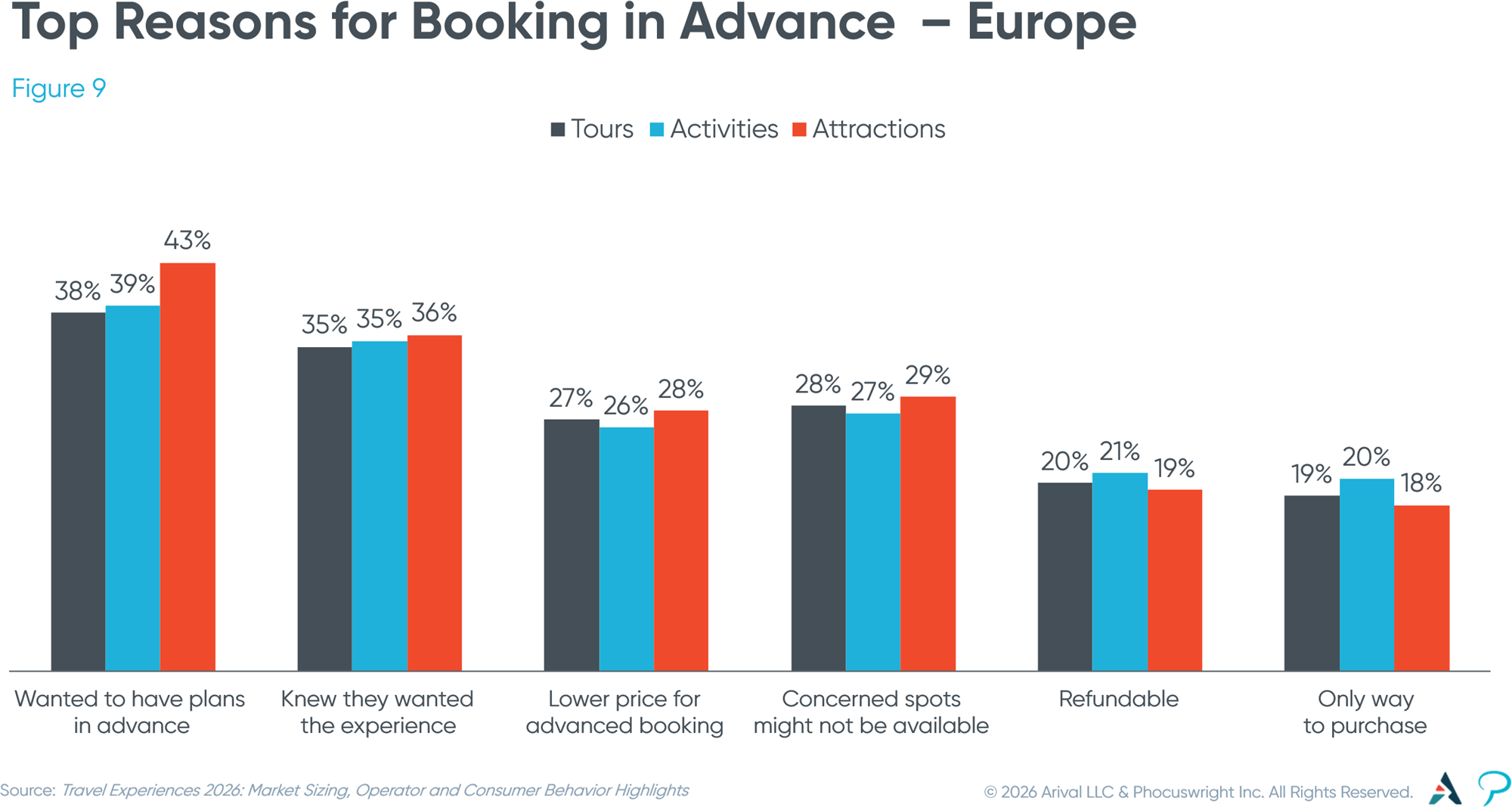
In both the U.S. and Europe, demand for more concrete advanced plans was a major driver of booking beforehand. This is a particularly common reason cited for advanced attraction purchases by U.S. customers. Another major factor is that travelers already knew they wanted to have the experience, likely complemented by the 27-34% of travelers who were concerned that spots might not be available. This suggests that capacity maximums and overcrowding play a role in the movement toward earlier bookings.
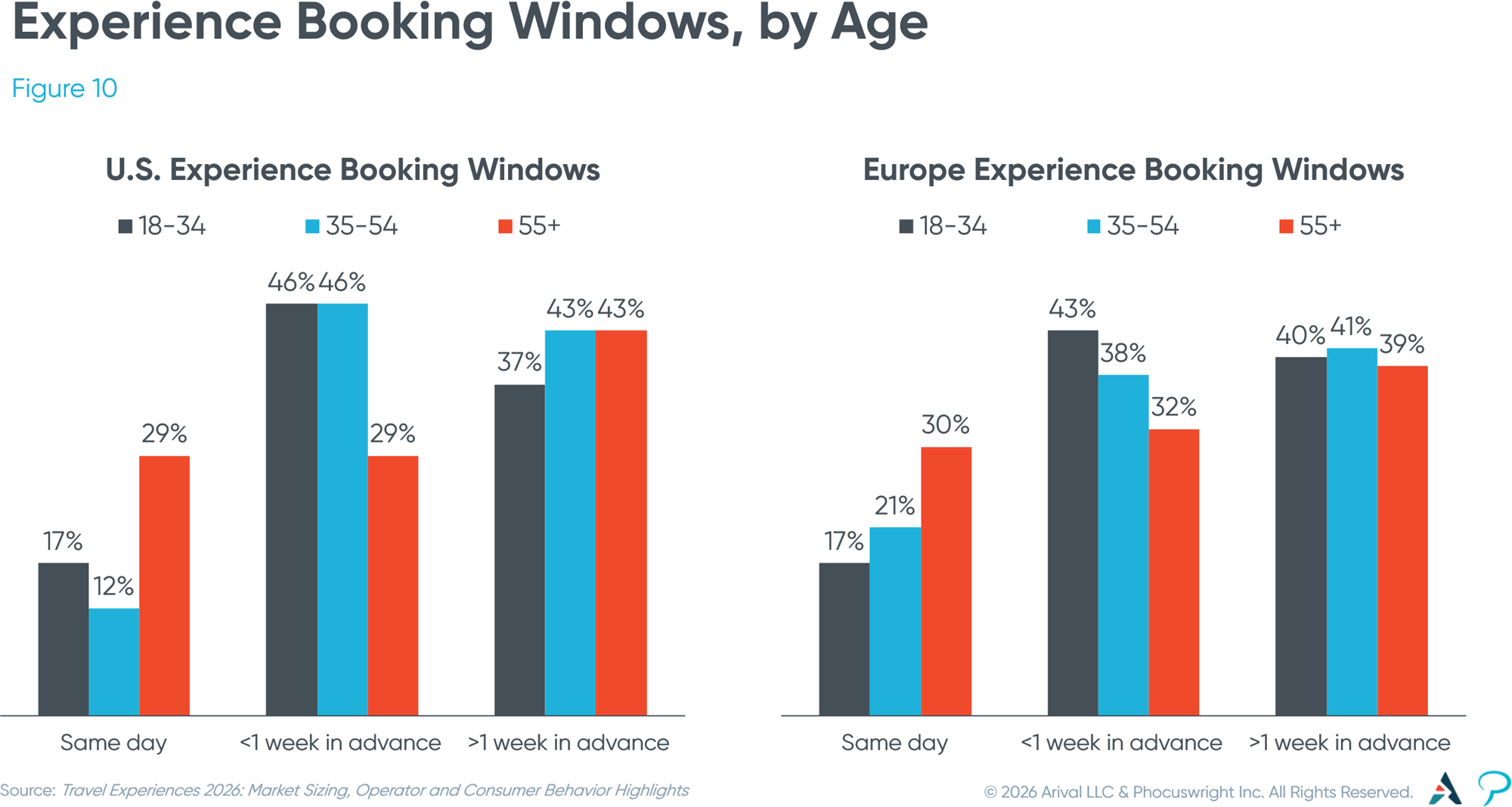
Only 12-30% of experiences are booked on the same day, a behavior that was reported far more often by older travelers (55+) across regions. Experiences may not occupy a last-minute or afterthought role in the trip-planning process, but they represent a secondary factor in booking compared to other trip components that may be perceived as more necessary (i.e., transportation or lodging is required to get to and stay in a destination to begin with). In Phocuswright's consumer research, 13-17% of European travelers and 34% of travelers in the U.S. booked an accommodation under a week before the trip. For air, this was 13-15% in Europe and 35% in the U.S.
Ultimately, the experiences sector is an important one to watch as it continues to mature. Experience operators have lagged in migrating to online distribution. Booking windows are shorter than other trip components, but many travelers continue to research and book in advance to guarantee themselves the in-destination experience that they seek. Continued growth is expected, but like all verticals of travel, experiences will have to fight for wallet share in an economy where many consumers feel financially squeezed.
A range of third-party data sources have been compiled to build this market sizing and inform this analysis.
Airports Council International (ACI World). (2024). World Airport Traffic Forecasts. Montréal: ACI World.
Airbus. (2024). Global Market Forecast. Toulouse: Airbus.
American Alliance of Museums (AAM). (2024). Museum Snapshot Survey / Sector Pulse 2024. Washington, DC: AAM.
Arival Global Operator Landscape 4th Ed. 2026, Boulder.
Arival U.S. Traveler Outlook and European Travel Outlook, 2025. Boulder.
Association of Leading Visitor Attractions (ALVA). (2025). Visitor Figures 2024. London: ALVA.
Boeing. (2024). Commercial Market Outlook. Seattle: Boeing.
European Travel Commission (ETC). (2025). European Tourism: Trends & Prospects (Quarterly 2025 editions). Brussels: ETC.
IAAPA. (2024). Global Theme & Amusement Park Outlook 2024-2028. Orlando: IAAPA.
International Civil Aviation Organization (ICAO). (2024). Long-term Traffic Forecasts. Montréal: ICAO.
International Monetary Fund (IMF). (2025). World Economic Outlook (October 2025). Washington, DC: IMF.
McKinsey, The Evolving Role of Experiences in Travel, 2024.
Outdoor Industry Association (2025), 2025 Outdoor Participation Trends Report, Boulder. OIA
Phocuswright. (2025). Global Travel Market Report 2025. New York: Phocuswright Inc.
Themed Entertainment Association (TEA) & AECOM. (2024). Global Experience Index (Theme Index & Museum Index). Burbank & Los Angeles: TEA/AECOM.
Tourism Economics & U.S. Travel Association. (2025). U.S. Travel Forecast 2025-2029. Washington, DC: U.S. Travel.
UN Tourism (formerly UNWTO). (2025). World Tourism Barometer; Tourism Data Dashboard. Madrid: UN Tourism.
World Travel & Tourism Council (WTTC). (2024). Travel & Tourism Economic Impact 2024. London: WTTC.

Civitatis is the leading global marketplace for tours and activities in Spanish and Portuguese. With a curated catalog in 4,200+ destinations and 5 million verified reviews, it connects 1.2 million travelers monthly with top-tier experiences. As the industry benchmark for Spain and Latin America, its mission is to "fill the trip" for millions worldwide.