
Real-Time Revolution in Hotel Operations


As the world emerges from the pandemic, the hotel industry faces new challenges and opportunities. Data has long been used to help make operating decisions. But what happens when the paradigm shifts, as it has post-COVID, with uncertainty around labor availability, increased desire for seamless guest experiences, and rapidly shifting demand patterns? Is historic data still the best way to make decisions and adapt to changing guest expectations and market conditions? The answer is twofold. It lies in looking at present and future data (rather than focusing too much on past trends), while also translating vast amounts of raw data into actionable insights that managers can apply and use regularly.
Real-time data is the beating heart through which forward-looking plans flow. It allows hoteliers to maximize profits while also optimizing business delivery and continuously improving guest experiences. Hotel operators today have unparalleled access to real-time and forecast data. Once a system is in place to bring together operational, labor and revenue data, a new kind of decision making can happen. When every system is connected and leadership can look at the operation holistically, they can respond to the precise situations that unfold each day (because they are more easily anticipated),
By examining how the hotel’s operations function in their current state, all the micro-decisions that contribute to optimizing overall performance can be improved. Simply put, this can result in higher profitability and enhanced guest experience. This article explores various real-time, data-centric approaches that can be used to achieve these goals, focusing on how the following five operational areas can be optimized:
- Labor scheduling and staffing
- Team member performance
- Sales data for trends
- Operational function automation
- Ancillary revenue from guest behavior data
Using Data to Inform Labor Scheduling and Staffing Decisions


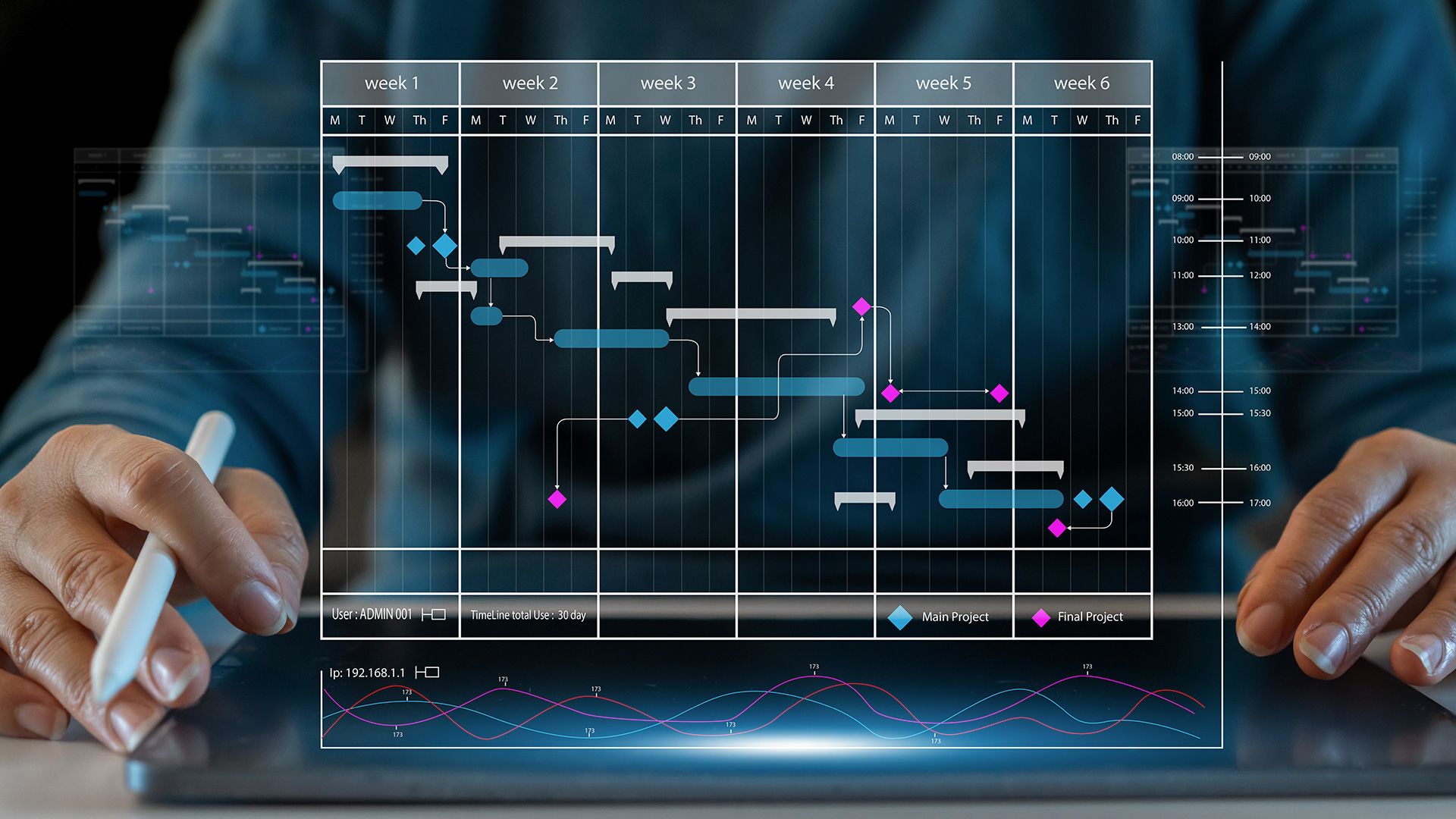
Given the heightened challenges of finding and managing a workforce in the post-pandemic era, one of the most impactful data applications is in labor scheduling and staffing decisions. It is customary to analyze data on past occupancy rates, future demand projections, and guest preferences to schedule staff. At a minimum, there are processes that managers can follow to address this manually: downloading, aligning and then evaluating recent operational performance reports derived from the property management and payroll systems. But predicting how many team members are needed when the past few years have been so volatile makes the situation much harder.
Instead, staffing should be approached based on specific daily demand, projected through business intelligence and forecasting tools. At the same time, this changes the way staffing is conducted to meet the needs of the workforce available to hotels today. This means:
- Daily scheduling to different day-parts based on when available staff can work
- Overnight cleans through cleaning agencies or contract labor
- Rolling rooms (e.g., not cleaning dirty rooms) on days when that evening will not have a sell-out
This approach can help hotels avoid overstaffing during slow periods and understaffing during peak periods, which can ultimately lead to lost revenue. The impact is that hotel operators reduce the time that they have to turn away revenue because rooms are not cleaned, even with limited staffing available to them. By using data to inform these micro-decisions, hotels can optimize their labor costs while still providing high-quality service to their guests.

Analyzing Team Member Performance Data

In addition to using data to inform labor scheduling and staffing decisions, hotels can also use data to analyze team member performance. Real-time performance means that an operator can intervene before small problems become bigger systemic issues. It also allows operators to spot good trends early and double down.
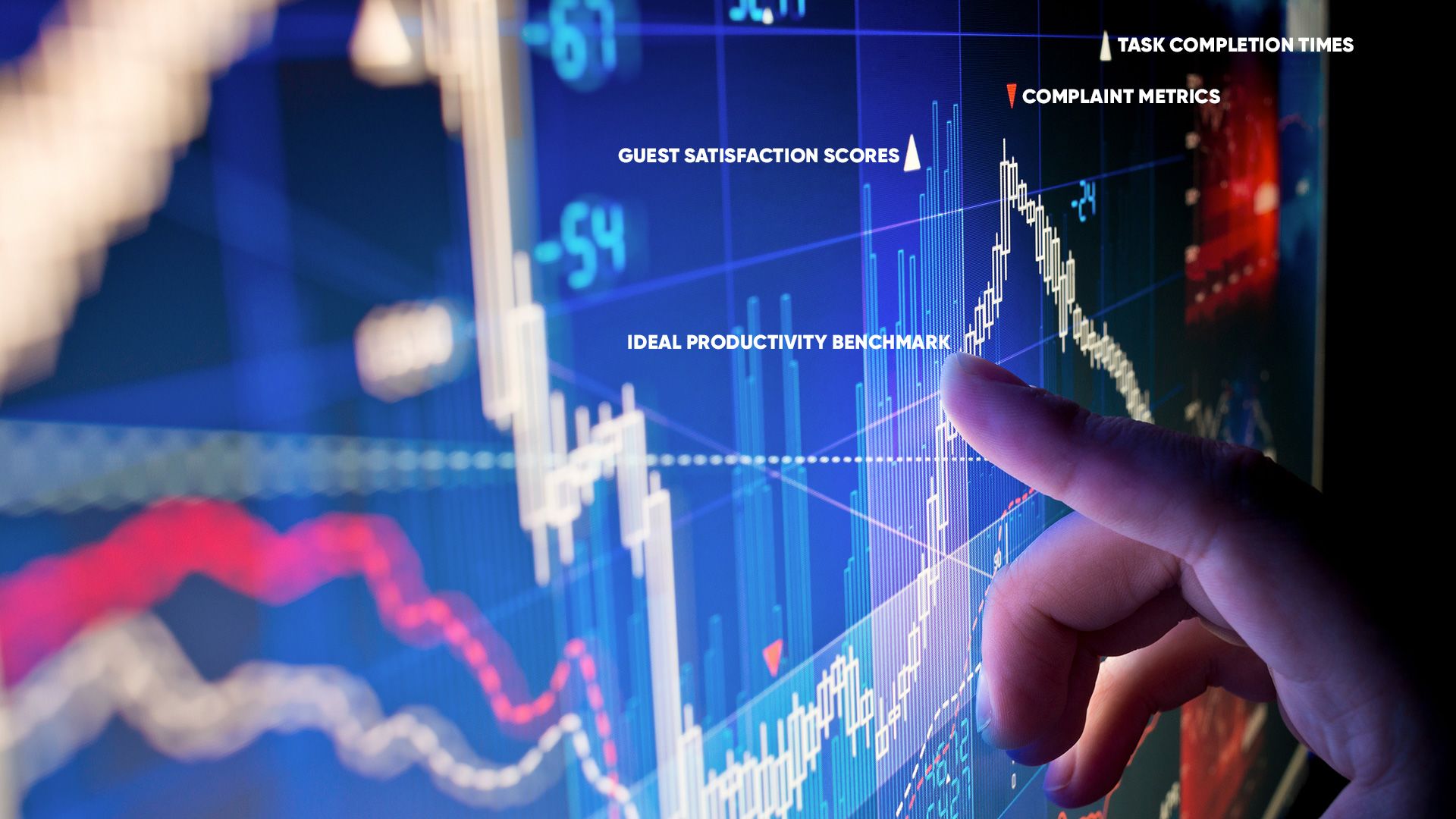
These metrics can be found all across the organization – at an individual hotel level and compared across hotels in a portfolio. Some are already traditionally tracked – like productivity, guest satisfaction scores, and employee turnover and retention rates. But others are more real-time, such as task completion times, which can provide a lens into what is happening in the moment. Pairing tried and true data with real-time data can help hotel operators identify new micro-areas to improve their operations and reduce costs. Operators should be benchmarking all attributes of the business involving team members to identify obstacles that will impact profit. Examples of the top productivity benchmarks to address, from a macro, full-hotel level, to a micro role-level, are:
- Total costs per occupied room (whole-hotel and by department)
- Total hours of labor per occupied room (whole-hotel and by department)
- Housekeeping minutes per clean, for stayover and checkout rooms
- Minutes to complete scheduled preventative maintenance tasks
- Minutes to complete standard guest request room deliveries
Additionally, analyzing performance data related to overtime and contract labor usage should happen side-by-side and regularly. The days of considering overtime as “bad” are no more; overtime is a tool that can be used to increase employee engagement and deliver on business requirements. Overtime can either be cost-saving (when compared to contract labor), or cost-driving if not utilized optimally. Productivity metrics based on role and business deliverables for contract labor team members should always be evaluated in the broader hotel operations mix. In turn, contract labor costs should never be looked at as a vendor invoice on their own.

Using Sales Pace and Sales Leader Performance Data to Identify Market-wide Trends
Another area where live data can be useful is in sales pace and sales leader performance. By analyzing market-wide trends and individual performance, hotels can react in real time to pace trends by increasing group pricing and length of stay restrictions or making operational business changes if they are performing behind target. Hotels can benchmark or compare performance of sales team members, and management groups can benchmark performance of hotels within their portfolio in a market. There are times when slow pacing is a direct consequence of staff actions and within the control of leadership, and at other times it is the result of market forces. Flagging gaps in this way identifies challenges so they can be pinpointed – especially when they are related to team member performance.
However, when team member performance is ruled out, if a hotel is experiencing slow sales in a particular market, they can use real-time data to identify the root cause of the problem. Evaluating shopping data, they may discover that their pricing is too high compared to their competitors, or that their marketing efforts are not achieving desired results. As an example, benchmarking booking flow from one time period to another, or from one hotel in a market to another in the same time period, can uncover underperforming marketing tactics. By using benchmarking solutions to identify these issues, hotels can make informed decisions about how to improve their operations and stay ahead of the competition.

Identifying Operational Functions That Can Be Automated


Another benefit of using operational data is identifying tasks that can be automated, or opportunities to augment team member efforts. This could lead to both cost savings and freeing up team members to deliver more personalized services. Software, AI, virtual team member support and robot support are all platforms to consider. Technology is constantly changing, and it’s critical to constantly look at how the newest technologies and solutions can improve hotel operations to avoid getting stuck doing things the way they have always been done.

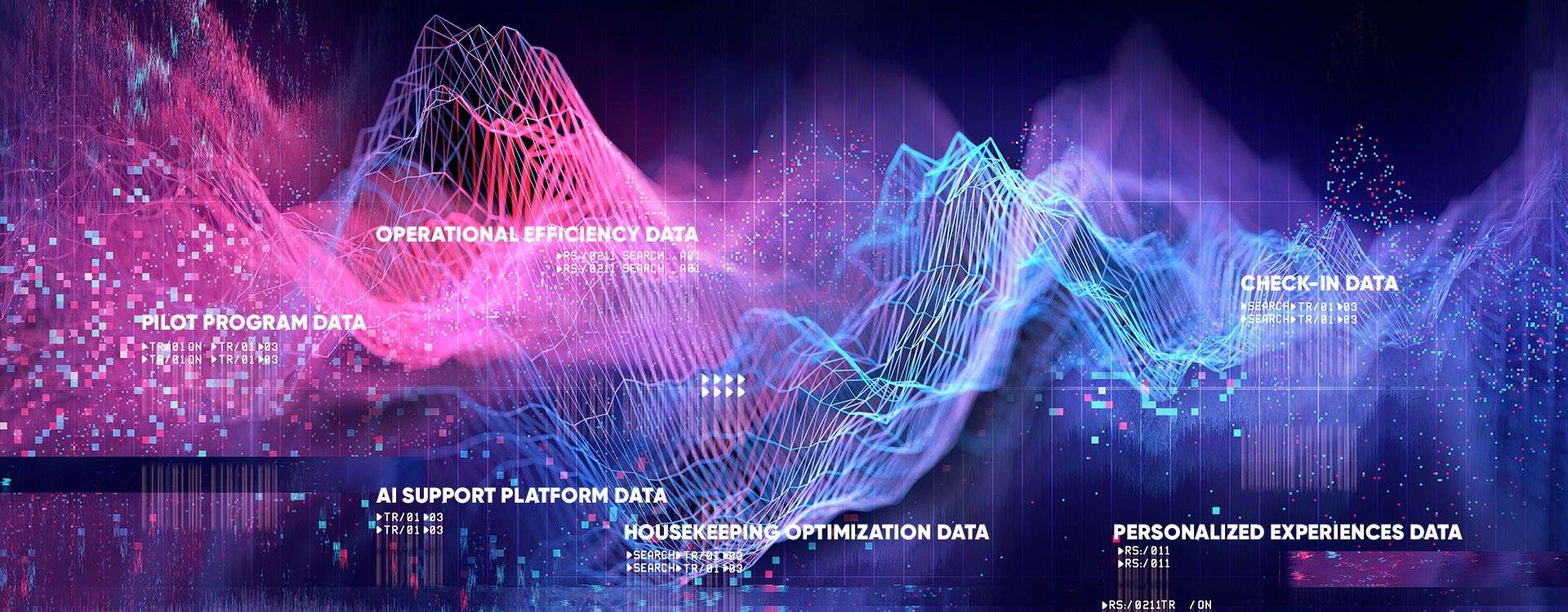
Automation starts with observing patterns in operational data that concentrate staff effort and reconciling it with functionalities available with tech providers in that field. The solutions change rapidly and reviewing what is available every year might offer some surprises. In many cases, real-time data can allow an operator to test ideas, and only fully adopt them if and when they are working as intended. Implementing new technology is hard but testing out “what if” scenarios on a few shifts and seeing if in real time the desired impact happens makes it easier. The traditional way to pilot new workflow concepts without full commitment is by manually changing a process briefly to mimic how implemented software would function, then observe that time period to compare results against the original operations process.
For example, automating the check-in process can free up front desk staff to provide more personalized services to guests when they seek out help, which can improve guest satisfaction and lead to more positive reviews. Adding vacuum robots to work beside a housekeeper could cut minutes-per-clean, but also alleviate staff’s physical stress of constantly bending over to plug in and remove a vacuum cleaner. Automating housekeeping boards on guest room floors can instantly reassign housekeepers’ rooms when “do not disturb” signs are present, allowing hotels that are continuing to complete stay-over cleans a chance to optimize housekeeping costs.
Predicting Ancillary Revenue Sources by Evaluating Guest Behavior Patterns
Another way that data can help maximize profits is by predicting new ancillary revenue sources by evaluating changing guest behavior patterns for each market where hotels operate. With the rise of conversational interactions within hotel chat, a new kind of unstructured data is available. Aggregating guest request types can flag specific sales opportunities for a hotel. For example, one analysis of guest requests across select service hotels over time found that support for in-lobby meetings, and business services help were the top sales opportunities for U.S. hotels. Translating this data into action could lead toward creating a “co-working” package, that would include limited business support, semi-private space and certain F&B (food & beverage) services.
Developing a program for and selling these services, versus reacting ad-hoc is a revenue opportunity. An additional approach would be rethinking how to compete with food delivery services (e.g., Uber Eats and DoorDash) based on data. Evaluate peak windows for food delivery based on guests’ requests, or hotel lobby foot traffic of delivery services to inform plans. Then, build a competitive “room service based” product, with easy QR code/app ordering, delivery-like packaging and process flows for delivery. Repositioning “room service” may not be appropriate for all properties, but the first step in evaluating if this is a logical path is to allow data to identify the potential opportunity.
Additionally, hotels should take a macro approach to evaluate pre-stay conversations with guests. What are top questions, requests and concerns? To maximize profits, hotels can consider how to turn external requests or concerns into direct revenue solutions. At a bare minimum, an operational process should be in place to pull daily “free form” field requests in reservation bookings and task management software.
By analyzing this data, as noted above, hotels can identify new ancillary revenue sources and create personalized offers to increase revenue per guest. In addition to room service and meetings examples, opportunities to consider include developing local packages, specialized F&B offers, day-use of hotel services or day-use rooms. For example, if a hotel notices that a large number of guests are ordering room service at certain times of the day, they could offer discounted packages for those meals or partner with a local restaurant to offer a more diverse menu.
Conclusion and Recommendations
Real-time data analysis is becoming increasingly important for hotels looking to optimize their performance and maximize profits. By using real-time data to inform micro-decisions, hotels can increase efficiency, cut costs, and improve guest satisfaction. From scheduling and staffing to automated systems and ancillary revenue sources, data can inform decisions that improve overall performance.
As we adapt to changing travel patterns, challenges in the labor market and inflationary pressures, the productive use of data will become critical to remain competitive. Embracing a data-centric approach using systems that synthesize all available data may require investment in new technology and training for staff. Nevertheless, the benefits in terms of increased revenue and improved guest experiences make it a worthwhile investment for hotels of all sizes.
Note: The authors are executives at Actabl, a real-time business intelligence and hotel operations management software platform formed in 2022 from the merger of ProfitSword, Hotel Effectiveness, Alice and Transcendent.
This article is part of a content series that explores some of the most impactful innovation and technology-driven trends that will influence the travel industry in 2023 and beyond.
Below is a link to each full trend analysis.
- The Future of Social Media, Influencers and Social Commerce in Travel
- Roundup: Web3 Is Proving Itself in Travel
- Green Travel Innovation Now (Yes, Now!)
- No Travel Experience Necessary: More Outsiders Enter the OTA Market
- Generative AI: Transforming the Travel Cycle
- Real-Time Revolution in Hotel Operations
- eVTOLs in Travel: Viable Addition or Flights of Fancy?
- Super Apps’ Secret Sauce
Watch the online event that covered each trend, presented by Phocuswright analysts:
 Built with Shorthand